Category: Power, Politics & Corruption

  • Investigating the Fall of Abe Fortas

    A Justice in the Crosshairs (1966–1969)

    SUMMARY OF KEY FINDINGS

    In this, the first article in a short series, declassified FBI files concerning Justice Abe Fortas paint him as a victim of ideological extortion, with the Bureau stepping in as his shield against threatening letters and calls. Yet, just beneath the surface of that narrative, a more familiar pattern of institutional self-interest emerges.
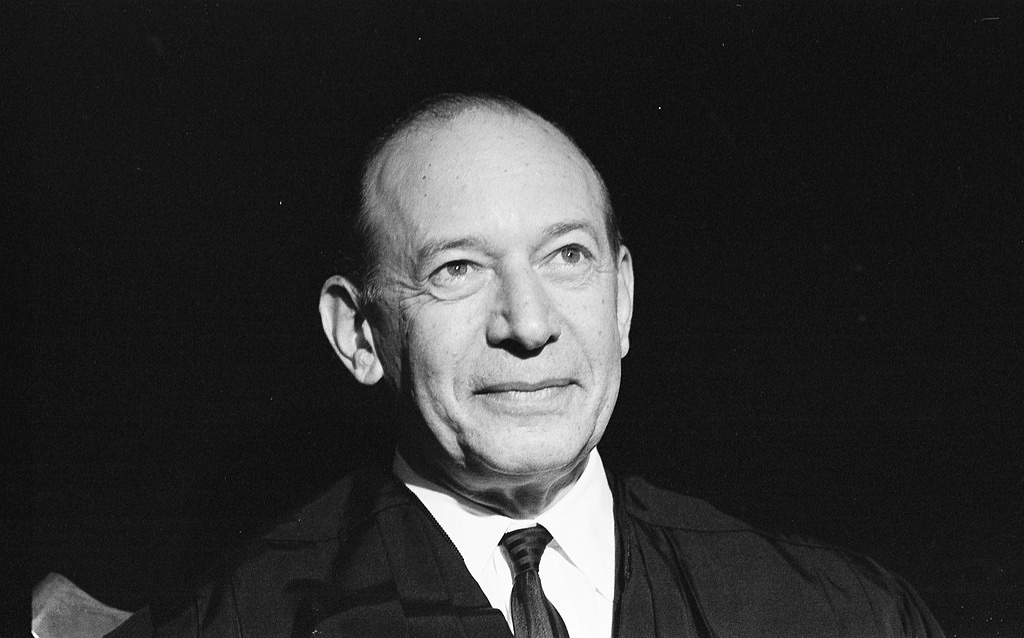
    Close-up portrait of a man in a suit and tie, smiling gently, against a dark background, wearing a judicial robe.
    Supreme Court justice Abe Fortas, head-and-shoulders portrait, facing front.

    It seems that the Bureau ran a dual-track operation: protecting Fortas publicly from antisemitic and segregationist harassment while quietly sharpening tools to probe his financial and political vulnerabilities.

    Even so, Fortas was hardly an innocent outsider swept up in the storm. He was a deeply embedded LBJ insider whose own ethical shortcuts, which include serving as an FBI informant in the 1966 Fred Black bugging affair, left him exposed once power passed from Johnson to Nixon.

    The FBI Vault files reveal real threats rooted in backlash against Fortas’s civil liberties rulings, but they also show bureaucratic abeyance on conduct inquiries timed suspiciously with Nixon-era pressure. Public moral attacks, such as Strom Thurmond’s infamous “Fortas Film Festival” screenings of explicit material from obscenity cases, added another layer of kompromat.

    In the end, Fortas’s fall was less about fringe cranks than the predictable pivot of state machinery, shielding a useful player until it became expedient to dismantle him. Governments can deliver meaningful advances in civil liberties, as some of Fortas’s opinions did; but they just as readily subordinate judicial independence to political necessity.

    The Fortas dossier is a clinical map of that tension.

    CHRONOLOGICAL TIMELINE OF EVENTS

    The timeline exposes the shifting priorities with bureaucratic clarity.

    In August 1966, the first “UnAmerican” letter arrived at Hoover’s desk, laced with criticism of Fortas and “ethnic groups.” That same year, Fortas secretly assisted Hoover and his deputy Cartha DeLoach by leaking confidential Supreme Court deliberations in the Fred Black case.

    Black, a Washington lobbyist with deep ties to North American Aviation and Bobby Baker’s Serv-U vending operation, had been the target of an illegal FBI microphone installed in his Sheraton-Carlton suite. Fortas helped steer the fallout away from the Bureau and LBJ, pinning sloppy oversight on RFK.

    By 1968, the pressure intensified. Fortas’s nomination for Chief Justice collapsed under Strom Thurmond’s relentless attacks, which included private screenings of films from cases where Fortas had voted to protect expression. Around the same period, Philadelphia-postmarked extortion letters from an entity calling itself the “White Racist Majority” escalated the threat environment.

    Then came 1969. On April 14, Nixon’s Assistant Attorney General Will Wilson launched inquiries into Fortas’s 1966 Florida trip and alleged SEC-related associations. By May 7, the Bureau placed the conduct investigation in abeyance to keep it from becoming publicly known.

    Two days later, a Richmond caller warned that Fortas’s upcoming speech would be his last. Fortas spoke anyway on May 10 at The Mosque in Richmond, Virginia, a secular Shriners venue with Moorish Revival architecture. Fortas resigned on May 14.
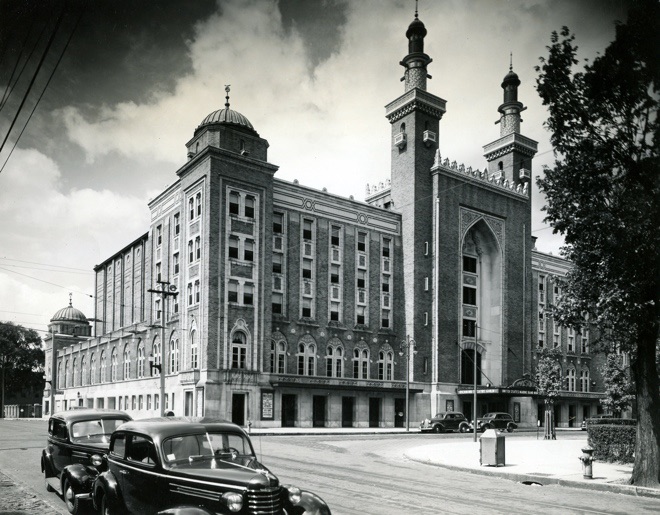
    Historic building with distinctive architecture, featuring towers and ornate details, surrounded by vintage cars on a street.

    That two-year gap between early threats and the 1968–69 escalation tracks Fortas’s deepening entanglement with the Warren Court and LBJ’s fading influence. The 1969 pause, meanwhile, aligns neatly with the new administration’s desire for Court realignment.

    COLD ANALYSIS OF THE EVIDENCE & SOURCES

    Viewed coldly, the forensic details in the FBI files (cheap Woolworth stationery, Philadelphia P.O. Boxes 30 and 43, handwriting matches) point to a lone actor riding the wave of segregationist fury rather than any genuine mass movement. The Bureau’s own lab connected the dots, yet the trail on those post office boxes was never pursued with real vigor.

    At the same time, parallel inquiries into Fortas’s finances moved forward under the cover of “reliable information” from Will Wilson. That timing, which surfaced years after the fact, carries the distinct odor of opposition research rather than organic discovery.

    The Fred Black episode stands as a pivotal contradiction.

    Black’s world of defense lobbying for North American Aviation and hidden Serv-U vending contracts at federal plants exemplified the crony access that defined the era. The FBI bug, sold as an organized crime probe involving gambling ties, delivered rich political intelligence.

    Fortas’s willingness to leak Court positions to protect the Bureau and LBJ exposed the incestuous reality behind the “protected victim” framing. Contemporary accounts, biographies such as Laura Kalman’s, and analyses by Alexander Charns align closely with the files but fill in the self-serving omissions the Bureau left behind.

    Will Wilson’s sources and the redacted accountant directive in internal memos suggest the machinery was preparing leverage, not merely routine oversight.

    RED FLAGS, OMISSIONS, AND BUREAUCRATIC BIAS

    The decision to hold the conduct investigation in abeyance on May 7, 1969, while protection details ramped up, stands as a textbook red flag. It preserved potential dirt for private use without risking a public spectacle that might rally Fortas’s defenders.

    The P.O. Box trail and deeper connections in Black’s network received far less aggressive attention than the optics demanded. Meanwhile, public attacks on Fortas’s obscenity jurisprudence, via Thurmond’s film screenings, played out in the open as cultural warfare, even as quieter Hoover-era files regarding morals reportedly circulated in the shadows.

    Fortas’s own history complicates any simple victim narrative. His New Deal roots and civil liberties rulings genuinely provoked ideological extremists, including antisemitic rhetoric from Klan-adjacent sources. Yet his role as LBJ fixer and informant in the Black affair made him vulnerable the moment the executive guard changed.

    The Quorum Club, which was Bobby Baker’s discreet Capitol Hill venue for mixing senators, lobbyists, drinks, and influence, represented the same ecosystem of access and potential leverage that Fortas had helped shield in 1966. That the machinery later turned on him illustrates a recurring truth: governments extend comfort and protection to insiders until political necessity demands otherwise.

    Bureaucratic silence around these entanglements speaks louder than the documented threats.

    UNRESOLVED QUESTIONS & INVESTIGATIVE LEADS

    Several threads remain frustratingly loose.

    What exactly did Fortas’s communications with DeLoach reveal about the Black case, and what did that specially requested accountant uncover before the probe was paused?

    Were the Philadelphia letter writer and the Richmond caller ever connected, or were they separate opportunists in the same turbulent climate?

    Deeper overlaps between Wolfson’s circle, SEC defendants, and the defense-vending networks around Black and North American Aviation also deserve fresh scrutiny.

    Looking ahead, some steps to chase down these leads include:

    These are not academic curiosities. They point to how easily the state’s machinery modulates justice when power changes hands.

    Justice Abe Fortas ultimately resigned to spare the Court further damage, yet the episode laid bare how judicial independence erodes under the weight of personal compromise and institutional realpolitik.

    Real threats existed.

    Real ethical lapses enabled the fall.

    The Bureau’s files offer a clinical map, but the fuller picture demands we reject sanitized victim stories and confront the enduring patterns of selective protection and leverage.

    Skepticism here is not cynicism, rather it is the necessary guardrail against future abuses.


    SOURCES

    1. FBI Records: The Vault — Abe Fortas (Parts 01–03). Declassified files on threats, investigations, and related matters.  

    https://vault.fbi.gov/abe-fortas

    2. FBI Memos and DeLoach-Fortas communications regarding the Fred Black case (1966), released via FOIA and analyzed in secondary sources.

    3. Life Magazine, “Fortas of the Supreme Court: A Question of Ethics” by William Lambert (May 9, 1969). The Wolfson exposé.  

       Contemporary reporting archived in major databases (NYT coverage of the article: https://www.nytimes.com/1969/05/05/archives/life-says-fortas-received-and-repaid-a-wolfson-fee-life-asserts.html).

    4. Laura Kalman, *Abe Fortas: A Biography* (Yale University Press, 1990). The definitive biography drawing on Fortas papers and interviews.  

    https://www.harvard.com/book/9780300052589 (or available via libraries/Internet Archive).

    5. Alexander Charns, *Cloak and Gavel: FBI Wiretaps, Bugs, Informers, and the Supreme Court* (University of Illinois Press, 1992). Key analysis of Fortas as FBI informant.  

    https://www.amazon.com/Cloak-Gavel-Wiretaps-Informers-Supreme/dp/0252018710 (and related Charns collections at Villanova Law).

    6. Black v. United States, 385 U.S. 26 (1966). Supreme Court opinion on the illegal bugging.  

    https://www.law.cornell.edu/supremecourt/text/385/26

    7. Senate Judiciary Committee Hearings on the Nomination of Abe Fortas as Chief Justice (1968). Records of Thurmond attacks and obscenity screenings.

    8. CQ Almanac 1969. Summary of Fortas resignation and scandal context.  

       Available via congressional archives.

    9. Athan Theoharis research and related FOIA materials on Hoover’s files and Fortas-DeLoach interactions (e.g., *The Secret Files of J. Edgar Hoover*).

    10. Additional contemporary coverage: New York Times, Time Magazine, and Washington Post archives on the 1968–1969 Fortas events.

    Fediverse Reactions
  • The Capitol Gains Machine

    Inside the 2025 Congressional Trading Boom and the Death of Public Trust

    Public Service or Private Equity?
    While the American public spent 2025 white-knuckling through the “Liberation Day” tariff shocks and the fallout of the longest government shutdown in U.S. history, the inhabitants of Capitol Hill were busy perfecting a different kind of “public service.”

    The 2025 Unusual Whales Congressional Trading Report has dropped, and the verdict is in: while your 401(k) was a casualty of policy-induced volatility, your representatives were rotating into safe-haven bunkers and high-alpha tech bets with the timing of a Swiss watch.

    The official narrative of the “citizen legislator” is dead. In its place is a sophisticated trading machine where market outperformance is the feature, not the bug. While the plebs grapple with a 10% blanket import tax, Congress has spent the year leveraging their positions to front-run the very “One Big Beautiful Bill” they were supposed to be debating.

    The 2025 Performance Scorecard: Beating the Benchmarks
    In a year where the S&P 500 (SPY) delivered a +16.8% return, a elite cadre of lawmakers proved that having a seat at the legislative table is the ultimate edge.

    While only 32.2% of the 311 backtested portfolios managed to beat the benchmark (a figure that suspiciously mirrors the success rate of professional hedge fund managers), the aggregate data by party reveals a clear winners’ circle.

    Group/Entity2025 Return (%)Relative Alpha vs. SPY (+16.8%)
    S&P 500 (SPY)16.8%0.0%
    Republicans17.3%+0.5%
    Democrats14.4%-2.4%
    NANC ETF (Dem-aligned)20.8%+4.0%
    GOP ETF (Rep-aligned)18.8%+2.0%

    The Super-Traders vs. The Danger of Concentration

    The top of the leaderboard belongs to the “Super-Traders.” Rep. Warren Davidson secured a staggering +78.8% return by abandoning diversification for concentrated industrial bets on General Electric and GE Vernova.

    He was joined by Rep. Donald Norcross, who coasted to a +70.8% gain using a minimalist two-stock strategy.

    On the flip side, Rep. Chip Roy provided a masterclass in the “Danger of Concentration,” cratering -59.0% after hitching his wagon to a single energy stock, Atlas Energy Solutions (AESI).

    Hedging the House: The Great Rotation to Safety

    The 2025 data exposes a sharp ideological schism in how the two parties view the economy they are currently breaking.

    In aggregate, members executed a massive tactical retreat, selling $169.6 million in stocks while buying only $125 million, resulting in a $44.6 million net exit from the equity market.

    Where did the money go? Straight into the bunkers.

    Lawmakers poured $89.5 million into fixed-income vehicles, including $57.4 million in bonds and $32.1 million in municipal securities.

    The Tech Split: Even within the Technology sector—the highest volume area—the strategy was a “risk-off” surgical strike:

    The Semiconductor Surge: Lawmakers aggressively acquired $17 million in hardware and semiconductor positions, with NVIDIA (NVDA) sucking up $11.2 million in inflows.

    The Software Exit: High-valuation software positions saw a heavy divestment of $11.7 million.

    Republicans spent the year adopting a “risk-off” posture, dominating the municipal market with 89% of all disclosed purchases. Meanwhile, Democrats maintained a “risk-on” approach through tech accumulation and aggressive options trading ($4.8 million in purchases vs. a measly $555,000 for the GOP).

    USONAR: Decoding the Information Channels

    To us, the aggregate numbers are just the smoke, while USONAR (Unusual Stock Occurrences: News, Alpha, and Representatives) is the fire.

    This tool flags trades that are “statistically improbable,” which means the representative likely knew the news before the press release hit the wire.

    Here are some of those statistical improbabilities:

    The Semiconductor Architect: Rep. Michael McCaul, the “architect of semiconductor advocacy,” traded $1.1 million in NVIDIA while simultaneously steering the nation’s chip policy.

    The Intel Insider: Rep. Tim Moore bought Intel multiple times just before the U.S. government announced a massive stake in the company. The result? A 100% rise and a +43.1% alpha beat on his Super Micro Computer (SMCI) position.

    The Tariff Escape: Rep. Susie Lee exited Full House Resorts on March 28, weeks before the “Liberation Day” tariff package rattled the gaming industry, avoiding a -21.3% relative loss.

    The Dollar General Play: Rep. Marjorie Taylor Greene snagged Dollar General just before news leaked regarding the closure of the “De Minimis” trade loophole, yielding a +10.7% alpha gain.

    Committee “Heat Zones”
    Nowhere is the conflict more toxic than in the committee rooms. While Sen. Sheldon Whitehouse (Judiciary/Antitrust) was busy “scrutinizing” Big Tech, he was liquidating $250,000 of his NVIDIA position. Oversight and interest haven’t just collided, they seem to have merged.

    The Collapse of Disclosure: 1,200 Violations and Counting

    The STOCK Act of 2012 is functionally dead. In 2025, transparency collapsed into a series of “historical dumps”—filings that disclose trades made years prior, effectively hiding market moves until they are irrelevant to the public but profitable for the member.

    The Worst Violators of 2025:

    Sen. Markwayne Mullin:  Disclosed trades on August 13, 2025, that were executed in January 2023, for a whopping 953-day delay.

    Rep. Lisa McClain:  Flooded the register with 504 late transactions in a single day, some dating back over a year.

    Rep. Rich McCormick:  Reported 33 trades that had been hidden for  917 days .

    When caught, the standard defense is the “clerical error” or the “spreadsheet glitch.” With the $200 fine being routinely waived, the penalty for hiding a multi-million dollar portfolio is less than a D.C. parking ticket.

    The Crisis of Legitimacy: Corruption is a Choice

    According to a 2025 study from the UCSD Rady School of Management (Alam & Rai), these trading patterns are a poison pill for democracy. The study found that trust in Congress plummets even if the politician loses money on the trade.

    The toxic element isn’t the gain, it’s the perceived attempt to use public power for private profit.

    To understand the disparity in American justice, look at the case of private citizen Bruce Cameron Conway (Case 3:25-cv-2101-S). For his insider trading, the SEC hit him with a total bill of  $241,599.56  (consisting of a $160,936.22 civil penalty, $61,201.95 in disgorgement, and $19,461.39 in interest).

    Meanwhile, a member of Congress can hide a trade for 953 days and pay $0.

    Corruption in Washington isn’t a lapse in judgment, but a protected perk of the elite.

    The Policy Graveyard: Where Reform Goes to Die

    While 86% of the public supports a total ban on congressional trading, the ETHICS Act and the TRUST in Congress Act continue to languish in the policy graveyard.

    The primary “blocker” is Speaker Mike Johnson, whose refusal to bring these bills to the floor has forced Reps. Anna Paulina Luna and Seth Magaziner into a desperate attempt to bypass his leadership.

    The absurdity of the situation was best captured in November, when  Rep. Bryan Steil, the Committee Chair overseeing the “Taking Stock of the STOCK Act” hearing, sat at the dais while holding a personal year-to-date return of +64%.

    When the fox is the chairman of the henhouse security committee, the chickens shouldn’t expect much.

    Conclusion: A Look Back and the Path Forward

    As we approach the middle of the year, we look back at Nancy Pelosi, the “Queen of the LEAP” and the undisputed GOAT of the disclosure form.

    Remember that time that she pivoted to supporting a trading ban, only after her wealth was secured and her seat was warm?

    The 2025 report makes it clear: the STOCK Act is toothless.

    And yet, the question remains:

    Will Congress finally vote to ban itself from the market, or are we just waiting for the next “historical dump” of secret portfolios to tell us how much they made while we weren’t looking?


  • FBI Surveillance of Social-Democratic Dissent During Cold War

    Investigative Framework and Strategic Context

    During the early 1960s, the height of the Cold War necessitated an expansive “Counter-Subversion” mandate for the Federal Bureau of Investigation. Beyond the detection of active espionage, the Bureau’s strategic requirements dictated the monitoring of public intellectuals who utilized their platforms to dissent from official U.S. foreign policy.

    This mandate was predicated on the intelligence baseline that ideological deviance, even when originating from non-communist sources, could facilitate “Communist infiltration” or provide a tactical opening for Soviet influence operations.

    Let’s evaluate the Bureau’s intelligence cycle regarding the distinction between social-democratic dissent and orthodox Communism. By analyzing specific target characterizations and the monitoring of international peace gatherings, the intent is to explore how the FBI utilized “strategic literacy” to map the shifting ideological landscape of the American Left.

    The Case of Erich Fromm: Characterizing the ‘Social-Democrat’

    For the Bureau, precise target characterization was a procedural necessity to justify the continued expenditure of investigative resources. Defining a subject’s specific political identity allowed the Bureau to weigh the “potential” for subversion against the subject’s stated ideology.

    The Ideological Profile of Erich Fromm
    The Bureau characterized Erich Fromm as an intellectual maintaining an “independent position” rooted in a “social-democrat viewpoint.” Reports confirmed his high-level affiliations, specifically his membership in the Socialist Party-Social Democratic Federation (SP-SDF) and his seat on its National Committee.

    While confidential sources noted Fromm was “somewhat influenced” by his psychoanalytic framework, they emphasized that his political actions were driven primarily by his social-democratic commitments.

    The “Berlin Thesis” Analysis and the Logic of Scrutiny
    The Bureau prioritized Fromm based on ideological deviance found in his writings on Berlin, which advocated for a “new approach” by the United States to avoid war. This “Berlin Thesis” triggered intense scrutiny because it diverged from the established foreign policy baseline.

    The “So What?” factor for the Bureau was the fear that Fromm’s advocacy could foster a climate of “neutralism” among the American public, which the Bureau equated with the first stage of Soviet subversion.

    Critically, the Bureau’s surveillance was “informed” rather than blind, as investigative files from 1955 show that Mexican informants reported the Communist Party (CP) had reprimanded its own members for contacting Fromm, explicitly labeling him an “anticommunist.”

    Despite the Bureau’s awareness that the CP regarded Fromm as an adversary, they refused to terminate surveillance, viewing his intellectual independence as a unique and dangerous ideological bridge.

    Target Descriptors from Confidential Sources:

    • Social-Democrat / Social and Democrat Viewpoint:  Primary political identifier.
    • Independent Position:  Refusal to adhere to Soviet or U.S. state orthodoxy.
    • Psychoanalytic Influence:  Secondary factor in his intellectual framework.
    • Anticommunist:  A characterization paradoxically shared by the Bureau’s sources and the Communist Party itself.

    Intelligence Methodologies: The 1962 Moscow World Congress

    The 1962 World Congress for General Disarmament and Peace in Moscow served as a primary site for identifying ideological contamination. The Bureau deployed a multi-layered surveillance apparatus to monitor American participation.

    Operational Mechanisms

    • Intelligence Sharing:  Active cooperation with the British Security Service (MI-5) to track international peace advocates like Canon L. John Collins and Lord Bertrand Russell.
    • Sensitive Informants:  Inter-office memos provided real-time reporting on delegate statements and internal conflicts.
    • Pretextual Operations:  Deployment of agents or informants using pretexts to identify organizational personnel and secure internal documents.

    The “Separate Statement” and Western Dissent

    A group of Western delegates, including Fromm, Lord Bertrand Russell, Kingsley Martin, and Sydney Silverman, issued a “Separate Statement” that complicated the Bureau’s narrative of the Congress as a monolithic Soviet puppet show.

    The statement criticized the U.S. for “stalling disarmament” via impossible inspection systems, but also labeled the U.S.S.R. as “obstructive” for postponing inspections until after disarmament.

    By urging advocates to maintain the right to criticize their own governments and take “limited risks” toward unilateral disarmament, the delegates established an independent stance that the Bureau characterized as having “sharp differences” with Soviet orthodoxy.

    | Observers and Peace Advocates | Organizational Affiliation | Role/Notes || —— | —— | —— || Homer Jack | SANE | Clergyman; described as the “most important functioning person in SANE.” || Stewart Meachem | American Friends Service Committee | Peace Secretary; Quaker and labor movement contact. || Erich Fromm | SP-SDF / SANE | Independent observer; identified as “anticommunist” by CP sources. || Lord Bertrand Russell | Congress Sponsor | Sent a tape-recorded message; critic of both global superpowers. || Canon L. John Collins | Western Delegate | Interviewed Khrushchev; faced expulsion threats from the Labor Party. |

    The Infiltration Narrative: SANE and the March on Washington (1965)

    As the Vietnam War escalated, the Bureau shifted focus toward domestic protest movements, specifically searching for a “trigger” of Communist Party (CPUSA) infiltration.

    The Trigger Event

    The Bureau’s transition from monitoring individuals to an “Internal Security” case for the broader movement was catalyzed on October 29, 1965. A confidential source at a meeting of the 11th Assembly District CPUSA Club obtained a circular for the upcoming “March on Washington for Peace in Vietnam.“

    The Bureau noted that the CPUSA was engaged in the “bulk distribution” of this propaganda, with club leadership urging members to mobilize their social circles for the November 27 event.

    The Competitive Landscape of Opinion

    The march, sponsored by SANE, utilized the circular, “A Call To Mobilize the Conscience of America,” to challenge U.S. policy. The Bureau tracked the sponsors of this effort and the “Declaration of Conscience,” viewing them as influential figures capable of swaying public sentiment toward a negotiated settlement.

    Key Sponsors Tracked by the Bureau:

    • Norman Thomas and A. J. Muste:  Veteran peace and social-democratic leaders. |  Benjamin Spock:  Co-Chairman of SANE. |  James Baldwin and Saul Bellow:  High-profile cultural and literary figures. |  Bayard Rustin and John Lewis:  Prominent civil rights leaders. |  Erich Fromm and Stuart Chase:  Intellectuals and social critics.The Bureau used the involvement of the  War Resisters League  and the  Student Peace Union  to justify the “Internal Security” status of the movement, despite the clearly non-communist profiles of the primary sponsors.

    Organizational Profiles and Affiliation Analysis

    The Bureau utilized systematic “characterization” to determine the subversiveness of various entities, often employing pretextual contacts to identify internal personnel.

    1. Committee for a Sane Nuclear Policy (SANE):  Profiled as the central hub for coordinating high-profile elite dissent and disarmament advocacy.
    2. Liberation Magazine:  Investigated via a “suitable pretext” on April 21, 1965, where a Special Agent posed as a student preparing a term paper. This operation identified Editor-in-Chief David Dellinger and Richard Gilpin. The Bureau noted the magazine was founded in 1956 with the assistance of the  War Resisters League  and maintained a global reach, circulating approximately 4,000 copies to South America, Canada, and the rest of the world.
    3. The Libertarian League:  Monitored through its “Internal Bulletin” and monthly publication  Views and Comments . Based at Box 261, NYC, its leadership (Russell Blackwell and William Rose) was tracked during an internal split influenced by the  Socialist Workers Party (SWP).

    The Paradox of Infiltration

    The Bureau’s internal reporting highlighted a recurring contradiction: while the CPUSA displayed intense interest in these groups, the actual participants often maintained “sharp differences” with the Party.

    The Bureau’s sophisticated intelligence showed that organizations like SANE were often hostile to the CPUSA, yet the FBI continued monitoring based on the “potential” for these groups to eventually serve as front organizations.

    The Paradox of Informed Surveillance

    The FBI’s investigative approach between 1960 and 1966 was defined by a remarkable “strategic literacy.” The Bureau did not operate in a vacuum of paranoia. Rather, it possessed a clinical and sophisticated understanding of the American Left. It accurately identified social-democratic dissent and noted when its subjects were viewed as enemies by the Soviet-aligned CPUSA.

    The core paradox, however, lies in the fact that this knowledge did not lead to the termination of surveillance. Instead, the Bureau utilized its sophisticated reporting to better map the potential for future subversion. The clinical objectivity of its ideological reporting was perpetually balanced against a proactive security mandate that viewed any significant departure from U.S. foreign policy as a threat to internal stability.

    This era remains a definitive study in how high-level intelligence can be used not to exonerate the innocent, but to more effectively manage perceived ideological deviance.

    Has anything really changes since then?


  • The Secret Files of Danny Kaye: Espionage, Draft-Dodging Rumors, and FBI Interrogations

    Introducing The Man Behind the Mirth

    To the mid-century American public, Danny Kaye was the kinetic “vessel of nonsense,” a beloved comedian whose tongue-twisting lyrics and rubber-faced antics made him a household fixture. But while the man born David Kaminsky was busy filming Up In Arms or earning $200 a week headlining for Sam H. Harris at the Alvin Theatre, J. Edgar Hoover’s FBI was looking past the greasepaint.

    Behind the laughter lies a declassified paper trail that includes a collection of memos, teletypes, and surveillance reports that paint a startlingly different picture.

    Why would the federal government expend such immense resources on a man famous for “vaudeville acts”?

    As it turns out, the Bureau was deeply suspicious of the performer, narrowing their lens on him for everything from high-level espionage to “pulling a fast one” on the military draft.

    The “Technical” Spy: When the FBI Feared the Funny Man

    In the fall of 1946, the Bureau’s lens shifted from Kaye’s fitness for service to his potential as a threat to national security. The flashpoint was a Baltimore FBI office teletype dated October 13, 1946.

    It contained a list of individuals under scrutiny for espionage, but Kaye stood out for one chilling reason: he was the only person on that list for whom the Bureau already held “pertinent information.”

    The Bureau wasn’t concerned with Kaye’s timing; they were worried about his “technical questions.” Agents scrutinized his interactions with a redacted associate to determine if Kaye had expressed an “unusual interest” in sensitive subjects or if he had “made notes” during conversations. The fear was a literal “information transfer” disguised by the comedian’s public persona. To break the case, the FBI didn’t just watch Kaye…they pressured his inner circle.

    The Director of the FBI ordered that this individual be ‘closely interrogated’ regarding their interactions with the actor. While Kaye’s role as treasurer for the Independent Citizens Committee of the Arts, Sciences and Professions (ICCASP) and his political rallies provided the Bureau with “context,” the inquiry ultimately hit a wall. Memos eventually noted that despite his activism, there was “no record of Communist Party membership” for Kaye at the time.

    The Five-Show Surveillance: Testing the “Vaudeville Act”

    If the espionage charges were high-concept, the 1944 Selective Service investigation was pure Broadway drama. The trouble started in the neon-lit booths of Lindy’s Restaurant in New York, a legendary haunt where “common gossip” suggested Kaye had successfully “pulled a fast one” on induction officials to secure a 4-F classification.

    The military’s response was as surreal as a Kaye musical number. A Lieutenant Colonel attached to the National Headquarters of Selective Service was dispatched to watch Kaye’s vaudeville act five times. His mission was as precise as it was absurd: to determine if the symptoms Kaye exhibited during his physical exam, which had just resulted in a 4-F rejection, were merely a “first-rate act” being recycled for the doctors.

    This highlights the unique peril of being a professional performer. That is, when your entire career is built on simulating reality, the government struggles to believe you’re telling the truth, even when you’re on a medical examination table.

    Bureaucratic Pettiness: The Local Board’s Grudge

    The conflict between David Kaminsky and the bureaucratic labyrinth of Local Board 229 in Brooklyn was a war of attrition. While higher military authorities eventually accepted his medical status, the local board held a distinct grudge. They voted unanimously (4-0) to deny Kaye permission to travel overseas with the USO to entertain troops, essentially grounding the star out of spite.

    The board’s assessment was biting and reflected their firm belief that Kaye was “malingering,” a term that became the centerpiece of their resistance. They were so unconvinced of his sincerity that they officially recorded a stinging rebuke regarding his value to the war effort. The board stated that Kaye’s performance would not benefit the “morale of the armed forces.”

    The situation became so contentious that the Director of Selective Service himself, Lewis B. Hershey, had to intervene. Hershey actually appealed the local board’s decision on Kaye’s behalf, arguing that the War Department should not be deprived of the performer’s unique talents.

    The Medical Mystery: From “1A” to “4-F”

    The files reveal a flip-flopping medical history that fueled the government’s suspicions of foul play. In early 1943, Kaye was classified as “1A”, or fit for service. By December 1, 1943, he was reclassified as “4-F,” a transition that the FBI scrutinized for “fraudulent rejection.”

    The reported ailments were documented with clinical precision:

    • Musculo-skeletal Issues:  A history of backaches (“clinically N.D.”) and a specific fracture of the coccyx from a fall four years prior.
    • Tuberculosis Contact:  Kaye’s mother had died of the disease, and X-rays showed an “old fibrotic tubercular lesion” in his lung.
    • Nervous Symptoms:  A pulse that fluctuated wildly between 90 and 120.

    Kaye was even held for a mandatory three-day “Medical Holdover” at Fort Jay on Governor’s Island to verify these findings. The local board remained skeptical until the very end, even after a joint examination by Dr. Simon Moore of Brooklyn State Hospital.

    It was Kaye’s personal physician, Dr. Janet Rioch, who provided the most biting defense against the Bureau’s favorite accusation. Dr. Rioch stated that careful observation left her “convinced that there is no problem here of malingering.”

    The Case That Closed Itself

    The Bureau’s obsession didn’t die easily. It simply morphed from the 1944 draft-dodging case into the 1946 espionage hunt, a cycle of continuous government harassment.

    Ultimately, however, the mountain of surveillance resulted in a legal molehill. The facts were eventually presented to the Assistant U.S. Attorney, who brought the curtain down on the drama.

    Assistant U.S. Attorney Vincent Quinn declined prosecution on the grounds that there was “no evidence to indicate any criminal violation of law.”

    The file was finally marked “CLOSED.”

    Danny Kaye remained a free man, his “vaudeville act” having survived one of the most intense backstage reviews in FBI history.

    Yet, the Kaye files leave us with a haunting question:

    In an era of heightened anxiety, do we ever truly “know” the public figures we admire, or are we simply watching the act the government allows us to see?