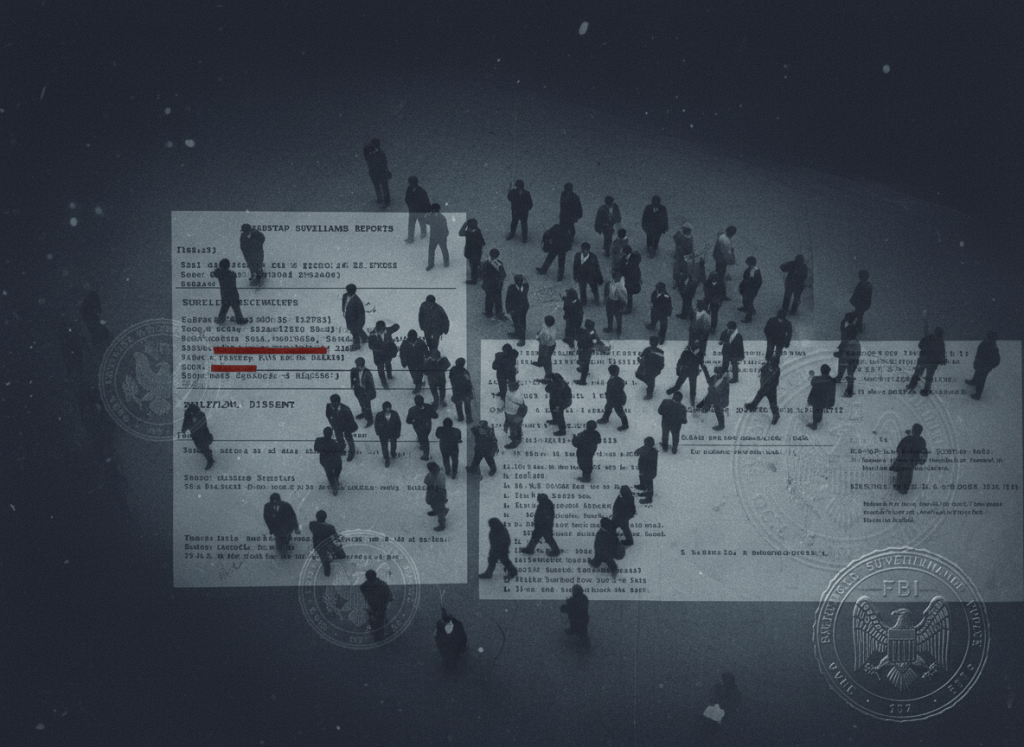
Investigative Framework and Strategic Context
During the early 1960s, the height of the Cold War necessitated an expansive “Counter-Subversion” mandate for the Federal Bureau of Investigation. Beyond the detection of active espionage, the Bureau’s strategic requirements dictated the monitoring of public intellectuals who utilized their platforms to dissent from official U.S. foreign policy.
This mandate was predicated on the intelligence baseline that ideological deviance, even when originating from non-communist sources, could facilitate “Communist infiltration” or provide a tactical opening for Soviet influence operations.
Let’s evaluate the Bureau’s intelligence cycle regarding the distinction between social-democratic dissent and orthodox Communism. By analyzing specific target characterizations and the monitoring of international peace gatherings, the intent is to explore how the FBI utilized “strategic literacy” to map the shifting ideological landscape of the American Left.
The Case of Erich Fromm: Characterizing the ‘Social-Democrat’
For the Bureau, precise target characterization was a procedural necessity to justify the continued expenditure of investigative resources. Defining a subject’s specific political identity allowed the Bureau to weigh the “potential” for subversion against the subject’s stated ideology.
The Ideological Profile of Erich Fromm
The Bureau characterized Erich Fromm as an intellectual maintaining an “independent position” rooted in a “social-democrat viewpoint.” Reports confirmed his high-level affiliations, specifically his membership in the Socialist Party-Social Democratic Federation (SP-SDF) and his seat on its National Committee.
While confidential sources noted Fromm was “somewhat influenced” by his psychoanalytic framework, they emphasized that his political actions were driven primarily by his social-democratic commitments.
The “Berlin Thesis” Analysis and the Logic of Scrutiny
The Bureau prioritized Fromm based on ideological deviance found in his writings on Berlin, which advocated for a “new approach” by the United States to avoid war. This “Berlin Thesis” triggered intense scrutiny because it diverged from the established foreign policy baseline.
The “So What?” factor for the Bureau was the fear that Fromm’s advocacy could foster a climate of “neutralism” among the American public, which the Bureau equated with the first stage of Soviet subversion.
Critically, the Bureau’s surveillance was “informed” rather than blind, as investigative files from 1955 show that Mexican informants reported the Communist Party (CP) had reprimanded its own members for contacting Fromm, explicitly labeling him an “anticommunist.”
Despite the Bureau’s awareness that the CP regarded Fromm as an adversary, they refused to terminate surveillance, viewing his intellectual independence as a unique and dangerous ideological bridge.
Target Descriptors from Confidential Sources:
- Social-Democrat / Social and Democrat Viewpoint: Primary political identifier.
- Independent Position: Refusal to adhere to Soviet or U.S. state orthodoxy.
- Psychoanalytic Influence: Secondary factor in his intellectual framework.
- Anticommunist: A characterization paradoxically shared by the Bureau’s sources and the Communist Party itself.
Intelligence Methodologies: The 1962 Moscow World Congress
The 1962 World Congress for General Disarmament and Peace in Moscow served as a primary site for identifying ideological contamination. The Bureau deployed a multi-layered surveillance apparatus to monitor American participation.
Operational Mechanisms
- Intelligence Sharing: Active cooperation with the British Security Service (MI-5) to track international peace advocates like Canon L. John Collins and Lord Bertrand Russell.
- Sensitive Informants: Inter-office memos provided real-time reporting on delegate statements and internal conflicts.
- Pretextual Operations: Deployment of agents or informants using pretexts to identify organizational personnel and secure internal documents.
The “Separate Statement” and Western Dissent
A group of Western delegates, including Fromm, Lord Bertrand Russell, Kingsley Martin, and Sydney Silverman, issued a “Separate Statement” that complicated the Bureau’s narrative of the Congress as a monolithic Soviet puppet show.
The statement criticized the U.S. for “stalling disarmament” via impossible inspection systems, but also labeled the U.S.S.R. as “obstructive” for postponing inspections until after disarmament.
By urging advocates to maintain the right to criticize their own governments and take “limited risks” toward unilateral disarmament, the delegates established an independent stance that the Bureau characterized as having “sharp differences” with Soviet orthodoxy.
| Observers and Peace Advocates | Organizational Affiliation | Role/Notes || —— | —— | —— || Homer Jack | SANE | Clergyman; described as the “most important functioning person in SANE.” || Stewart Meachem | American Friends Service Committee | Peace Secretary; Quaker and labor movement contact. || Erich Fromm | SP-SDF / SANE | Independent observer; identified as “anticommunist” by CP sources. || Lord Bertrand Russell | Congress Sponsor | Sent a tape-recorded message; critic of both global superpowers. || Canon L. John Collins | Western Delegate | Interviewed Khrushchev; faced expulsion threats from the Labor Party. |
The Infiltration Narrative: SANE and the March on Washington (1965)
As the Vietnam War escalated, the Bureau shifted focus toward domestic protest movements, specifically searching for a “trigger” of Communist Party (CPUSA) infiltration.
The Trigger Event
The Bureau’s transition from monitoring individuals to an “Internal Security” case for the broader movement was catalyzed on October 29, 1965. A confidential source at a meeting of the 11th Assembly District CPUSA Club obtained a circular for the upcoming “March on Washington for Peace in Vietnam.“
The Bureau noted that the CPUSA was engaged in the “bulk distribution” of this propaganda, with club leadership urging members to mobilize their social circles for the November 27 event.
The Competitive Landscape of Opinion
The march, sponsored by SANE, utilized the circular, “A Call To Mobilize the Conscience of America,” to challenge U.S. policy. The Bureau tracked the sponsors of this effort and the “Declaration of Conscience,” viewing them as influential figures capable of swaying public sentiment toward a negotiated settlement.
Key Sponsors Tracked by the Bureau:
- Norman Thomas and A. J. Muste: Veteran peace and social-democratic leaders. | Benjamin Spock: Co-Chairman of SANE. | James Baldwin and Saul Bellow: High-profile cultural and literary figures. | Bayard Rustin and John Lewis: Prominent civil rights leaders. | Erich Fromm and Stuart Chase: Intellectuals and social critics.The Bureau used the involvement of the War Resisters League and the Student Peace Union to justify the “Internal Security” status of the movement, despite the clearly non-communist profiles of the primary sponsors.
Organizational Profiles and Affiliation Analysis
The Bureau utilized systematic “characterization” to determine the subversiveness of various entities, often employing pretextual contacts to identify internal personnel.
- Committee for a Sane Nuclear Policy (SANE): Profiled as the central hub for coordinating high-profile elite dissent and disarmament advocacy.
- Liberation Magazine: Investigated via a “suitable pretext” on April 21, 1965, where a Special Agent posed as a student preparing a term paper. This operation identified Editor-in-Chief David Dellinger and Richard Gilpin. The Bureau noted the magazine was founded in 1956 with the assistance of the War Resisters League and maintained a global reach, circulating approximately 4,000 copies to South America, Canada, and the rest of the world.
- The Libertarian League: Monitored through its “Internal Bulletin” and monthly publication Views and Comments . Based at Box 261, NYC, its leadership (Russell Blackwell and William Rose) was tracked during an internal split influenced by the Socialist Workers Party (SWP).
The Paradox of Infiltration
The Bureau’s internal reporting highlighted a recurring contradiction: while the CPUSA displayed intense interest in these groups, the actual participants often maintained “sharp differences” with the Party.
The Bureau’s sophisticated intelligence showed that organizations like SANE were often hostile to the CPUSA, yet the FBI continued monitoring based on the “potential” for these groups to eventually serve as front organizations.
The Paradox of Informed Surveillance
The FBI’s investigative approach between 1960 and 1966 was defined by a remarkable “strategic literacy.” The Bureau did not operate in a vacuum of paranoia. Rather, it possessed a clinical and sophisticated understanding of the American Left. It accurately identified social-democratic dissent and noted when its subjects were viewed as enemies by the Soviet-aligned CPUSA.
The core paradox, however, lies in the fact that this knowledge did not lead to the termination of surveillance. Instead, the Bureau utilized its sophisticated reporting to better map the potential for future subversion. The clinical objectivity of its ideological reporting was perpetually balanced against a proactive security mandate that viewed any significant departure from U.S. foreign policy as a threat to internal stability.
This era remains a definitive study in how high-level intelligence can be used not to exonerate the innocent, but to more effectively manage perceived ideological deviance.
Has anything really changes since then?
- SEC Flagged OTC Link’s Access-Control Problem in 2016. It Was Still There in 2023.
- VA Pricing Problems Spread Beyond Drugs, With 11 of 12 Medical-Supply Proposals Flagged
- The Postal Service and Its Watchdog Cannot Agree on Whether They Spoke in 2024
- The Pentagon’s Own Gas Station Is Losing Money on Every Gallon
- The $215 Million Quantum Race That Took Washington a Decade to Build

