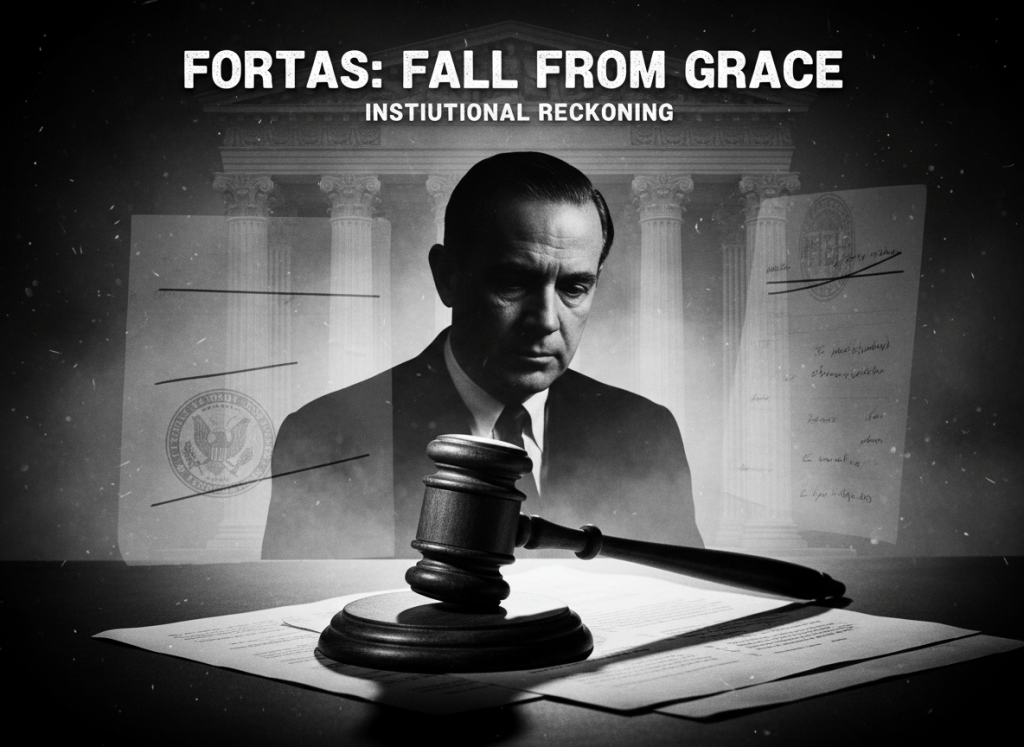
A Justice in the Crosshairs (1966–1969)
SUMMARY OF KEY FINDINGS
In this, the first article in a short series, declassified FBI files concerning Justice Abe Fortas paint him as a victim of ideological extortion, with the Bureau stepping in as his shield against threatening letters and calls. Yet, just beneath the surface of that narrative, a more familiar pattern of institutional self-interest emerges.
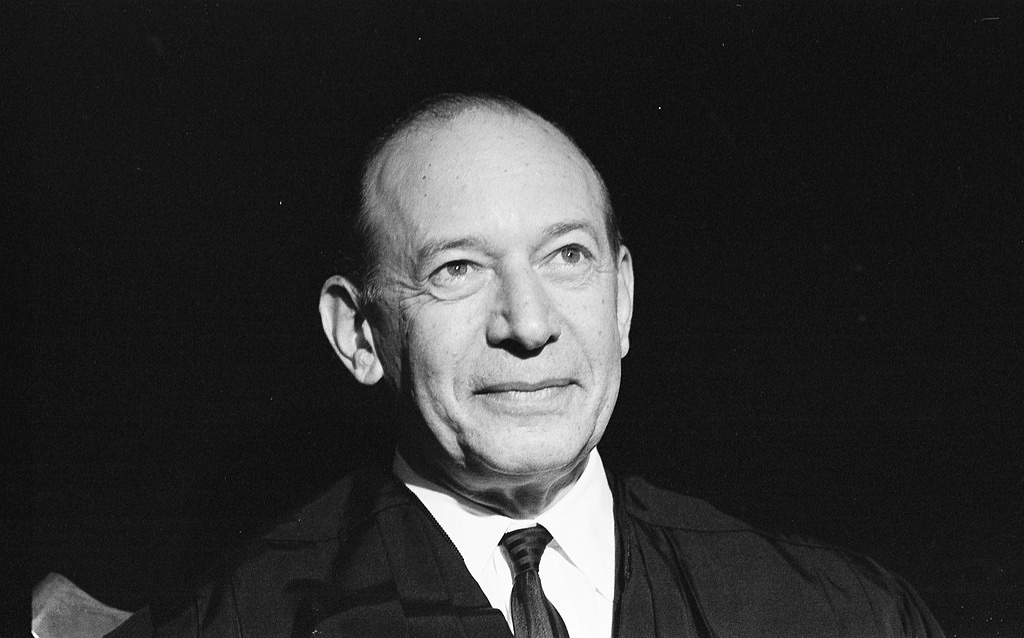
It seems that the Bureau ran a dual-track operation: protecting Fortas publicly from antisemitic and segregationist harassment while quietly sharpening tools to probe his financial and political vulnerabilities.
Even so, Fortas was hardly an innocent outsider swept up in the storm. He was a deeply embedded LBJ insider whose own ethical shortcuts, which include serving as an FBI informant in the 1966 Fred Black bugging affair, left him exposed once power passed from Johnson to Nixon.
The FBI Vault files reveal real threats rooted in backlash against Fortas’s civil liberties rulings, but they also show bureaucratic abeyance on conduct inquiries timed suspiciously with Nixon-era pressure. Public moral attacks, such as Strom Thurmond’s infamous “Fortas Film Festival” screenings of explicit material from obscenity cases, added another layer of kompromat.
In the end, Fortas’s fall was less about fringe cranks than the predictable pivot of state machinery, shielding a useful player until it became expedient to dismantle him. Governments can deliver meaningful advances in civil liberties, as some of Fortas’s opinions did; but they just as readily subordinate judicial independence to political necessity.
The Fortas dossier is a clinical map of that tension.
CHRONOLOGICAL TIMELINE OF EVENTS
The timeline exposes the shifting priorities with bureaucratic clarity.
In August 1966, the first “UnAmerican” letter arrived at Hoover’s desk, laced with criticism of Fortas and “ethnic groups.” That same year, Fortas secretly assisted Hoover and his deputy Cartha DeLoach by leaking confidential Supreme Court deliberations in the Fred Black case.
Black, a Washington lobbyist with deep ties to North American Aviation and Bobby Baker’s Serv-U vending operation, had been the target of an illegal FBI microphone installed in his Sheraton-Carlton suite. Fortas helped steer the fallout away from the Bureau and LBJ, pinning sloppy oversight on RFK.
By 1968, the pressure intensified. Fortas’s nomination for Chief Justice collapsed under Strom Thurmond’s relentless attacks, which included private screenings of films from cases where Fortas had voted to protect expression. Around the same period, Philadelphia-postmarked extortion letters from an entity calling itself the “White Racist Majority” escalated the threat environment.
Then came 1969. On April 14, Nixon’s Assistant Attorney General Will Wilson launched inquiries into Fortas’s 1966 Florida trip and alleged SEC-related associations. By May 7, the Bureau placed the conduct investigation in abeyance to keep it from becoming publicly known.
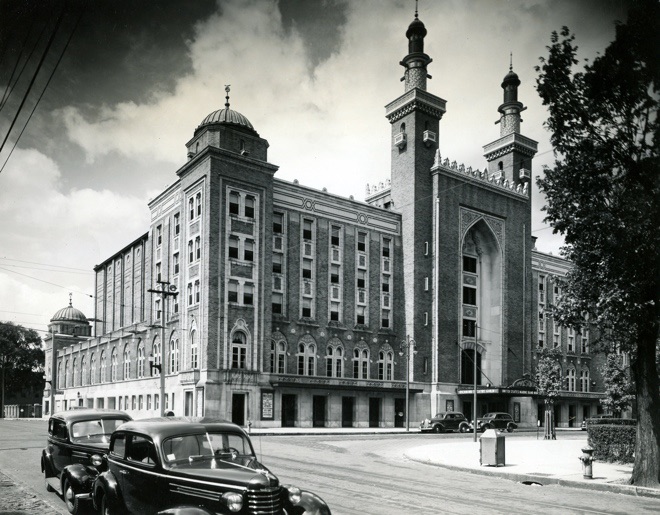
Two days later, a Richmond caller warned that Fortas’s upcoming speech would be his last. Fortas spoke anyway on May 10 at The Mosque in Richmond, Virginia, a secular Shriners venue with Moorish Revival architecture. Fortas resigned on May 14.
That two-year gap between early threats and the 1968–69 escalation tracks Fortas’s deepening entanglement with the Warren Court and LBJ’s fading influence. The 1969 pause, meanwhile, aligns neatly with the new administration’s desire for Court realignment.
COLD ANALYSIS OF THE EVIDENCE & SOURCES
Viewed coldly, the forensic details in the FBI files (cheap Woolworth stationery, Philadelphia P.O. Boxes 30 and 43, handwriting matches) point to a lone actor riding the wave of segregationist fury rather than any genuine mass movement. The Bureau’s own lab connected the dots, yet the trail on those post office boxes was never pursued with real vigor.
At the same time, parallel inquiries into Fortas’s finances moved forward under the cover of “reliable information” from Will Wilson. That timing, which surfaced years after the fact, carries the distinct odor of opposition research rather than organic discovery.
The Fred Black episode stands as a pivotal contradiction.
Black’s world of defense lobbying for North American Aviation and hidden Serv-U vending contracts at federal plants exemplified the crony access that defined the era. The FBI bug, sold as an organized crime probe involving gambling ties, delivered rich political intelligence.
Fortas’s willingness to leak Court positions to protect the Bureau and LBJ exposed the incestuous reality behind the “protected victim” framing. Contemporary accounts, biographies such as Laura Kalman’s, and analyses by Alexander Charns align closely with the files but fill in the self-serving omissions the Bureau left behind.
Will Wilson’s sources and the redacted accountant directive in internal memos suggest the machinery was preparing leverage, not merely routine oversight.
RED FLAGS, OMISSIONS, AND BUREAUCRATIC BIAS
The decision to hold the conduct investigation in abeyance on May 7, 1969, while protection details ramped up, stands as a textbook red flag. It preserved potential dirt for private use without risking a public spectacle that might rally Fortas’s defenders.
The P.O. Box trail and deeper connections in Black’s network received far less aggressive attention than the optics demanded. Meanwhile, public attacks on Fortas’s obscenity jurisprudence, via Thurmond’s film screenings, played out in the open as cultural warfare, even as quieter Hoover-era files regarding morals reportedly circulated in the shadows.
Fortas’s own history complicates any simple victim narrative. His New Deal roots and civil liberties rulings genuinely provoked ideological extremists, including antisemitic rhetoric from Klan-adjacent sources. Yet his role as LBJ fixer and informant in the Black affair made him vulnerable the moment the executive guard changed.
The Quorum Club, which was Bobby Baker’s discreet Capitol Hill venue for mixing senators, lobbyists, drinks, and influence, represented the same ecosystem of access and potential leverage that Fortas had helped shield in 1966. That the machinery later turned on him illustrates a recurring truth: governments extend comfort and protection to insiders until political necessity demands otherwise.
Bureaucratic silence around these entanglements speaks louder than the documented threats.
UNRESOLVED QUESTIONS & INVESTIGATIVE LEADS
Several threads remain frustratingly loose.
What exactly did Fortas’s communications with DeLoach reveal about the Black case, and what did that specially requested accountant uncover before the probe was paused?
Were the Philadelphia letter writer and the Richmond caller ever connected, or were they separate opportunists in the same turbulent climate?
Deeper overlaps between Wolfson’s circle, SEC defendants, and the defense-vending networks around Black and North American Aviation also deserve fresh scrutiny.
Looking ahead, some steps to chase down these leads include:
- FOIAs for the full Black bug transcripts and DeLoach memos
- a re-examination of those Philadelphia post office box rental records from 1966–1968
- and cross-referencing the Keifer-Stewart judgment with broader influence operations.
These are not academic curiosities. They point to how easily the state’s machinery modulates justice when power changes hands.
Justice Abe Fortas ultimately resigned to spare the Court further damage, yet the episode laid bare how judicial independence erodes under the weight of personal compromise and institutional realpolitik.
Real threats existed.
Real ethical lapses enabled the fall.
The Bureau’s files offer a clinical map, but the fuller picture demands we reject sanitized victim stories and confront the enduring patterns of selective protection and leverage.
Skepticism here is not cynicism, rather it is the necessary guardrail against future abuses.
- Banned for Life, Still Trading: The FTC’s Four-Year Fight to Keep Martin Shkreli Out of Pharma
- Medicare Froze Lab Cuts for Six Years. Now CMS Says It Can Save $1 Billion a Year.
- The Furnace Broke. The Recommendations Didn’t.
- Federal Register Watch: October 13, 2026
- The VA Hospital That Kept Failing the Same Inspection
SOURCES
1. FBI Records: The Vault — Abe Fortas (Parts 01–03). Declassified files on threats, investigations, and related matters.
https://vault.fbi.gov/abe-fortas
2. FBI Memos and DeLoach-Fortas communications regarding the Fred Black case (1966), released via FOIA and analyzed in secondary sources.
3. Life Magazine, “Fortas of the Supreme Court: A Question of Ethics” by William Lambert (May 9, 1969). The Wolfson exposé.
Contemporary reporting archived in major databases (NYT coverage of the article: https://www.nytimes.com/1969/05/05/archives/life-says-fortas-received-and-repaid-a-wolfson-fee-life-asserts.html).
4. Laura Kalman, *Abe Fortas: A Biography* (Yale University Press, 1990). The definitive biography drawing on Fortas papers and interviews.
https://www.harvard.com/book/9780300052589 (or available via libraries/Internet Archive).
5. Alexander Charns, *Cloak and Gavel: FBI Wiretaps, Bugs, Informers, and the Supreme Court* (University of Illinois Press, 1992). Key analysis of Fortas as FBI informant.
6. Black v. United States, 385 U.S. 26 (1966). Supreme Court opinion on the illegal bugging.
https://www.law.cornell.edu/supremecourt/text/385/26
7. Senate Judiciary Committee Hearings on the Nomination of Abe Fortas as Chief Justice (1968). Records of Thurmond attacks and obscenity screenings.
8. CQ Almanac 1969. Summary of Fortas resignation and scandal context.
Available via congressional archives.
9. Athan Theoharis research and related FOIA materials on Hoover’s files and Fortas-DeLoach interactions (e.g., *The Secret Files of J. Edgar Hoover*).
10. Additional contemporary coverage: New York Times, Time Magazine, and Washington Post archives on the 1968–1969 Fortas events.

