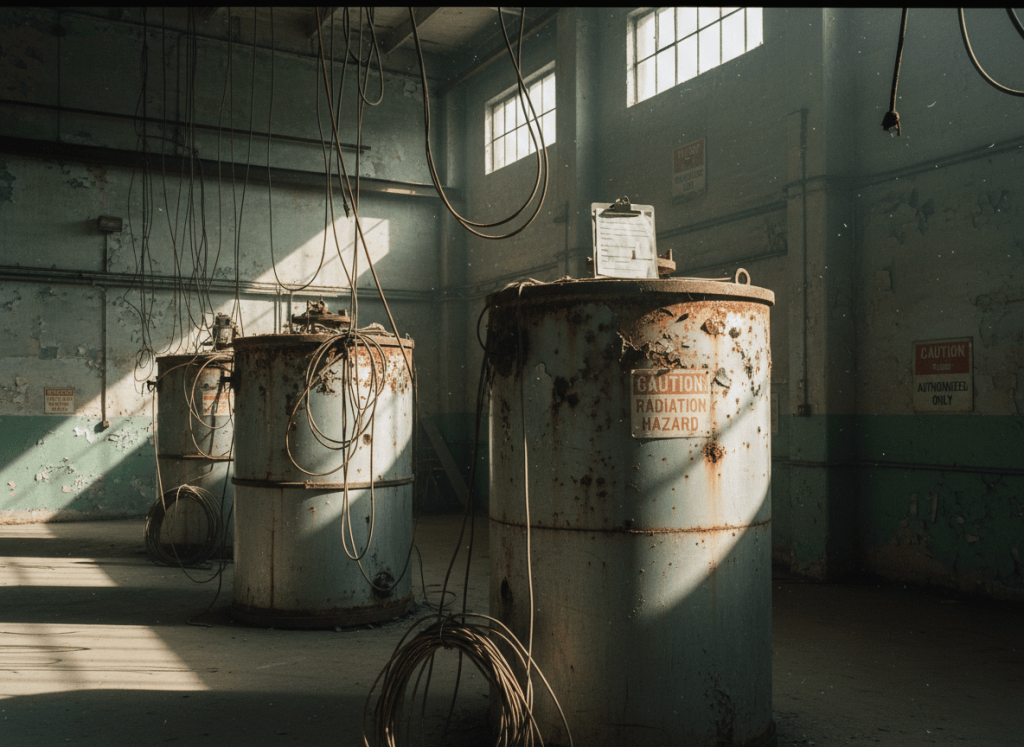
The Department of Energy is looking for companies interested in turning leftovers from America’s nuclear weapons complex into useful commodities.
There is aluminum and copper from uranium enrichment plants. Lead shielding from a former nuclear rocket facility. Lithium hydride, radioactive cesium and contaminated platinum at Oak Ridge. And in Utah, there are millions of tons of uranium mill tailings that may still contain recoverable vanadium and other critical minerals.
Before anyone starts digging, however, DOE may want to check the calculator.
In an Expression of Interest released by DOE’s Office of Environmental Management, the department says approximately 8,000 tons of aluminum are available at its Paducah cleanup site in Kentucky.
DOE helpfully converts that figure to 56 million pounds.
It isn’t.
Eight thousand tons is 16 million pounds, meaning DOE’s own critical-minerals inventory appears to overstate the aluminum weight by 40 million pounds.
Fortunately, the underlying 8,000-ton estimate appears consistently enough elsewhere in the document to make the problem look considerably more like arithmetic than the sudden appearance of 20,000 additional tons of Cold War aluminum.
And there is plenty of material without the extra zeroes.
DOE announced the initiative Sept. 18, seeking information from private industry about recovering surplus materials at five Environmental Management cleanup sites: Paducah, Kentucky; Portsmouth, Ohio; Oak Ridge, Tennessee; the Nevada National Security Site; and the Moab Uranium Mill Tailings Remedial Action Project in Utah.
At Paducah alone, DOE identifies about 8,000 tons of aluminum and 2,000 tons of copper, plus smaller quantities of tungsten, silver, platinum and selenium.
That is roughly 20 million pounds of aluminum and copper before anyone reaches the more exotic items on the list.
Much of it is a legacy of the enormous gaseous diffusion equipment once used to enrich uranium. DOE says the aluminum and copper are primarily contaminated with uranium on their surfaces, potentially allowing them to be decontaminated and recovered.
Portsmouth presents a similar opportunity, including about 1,100 tons of copper from electrical equipment, 280 pounds of fluorine and a decidedly less industrial 3.1 grams of platinum.
Oak Ridge gets stranger.
DOE lists approximately 10,000 pounds of lithium hydride contained in shielding assemblies, about 1,000 grams of platinum and 1.39 pounds of cesium-137 chloride contained in sealed radioactive sources.
Recovering the cesium, unsurprisingly, would require shielding, remote handling and specialized processing. The platinum comes with its own complication: contamination from cobalt, cesium and strontium.
In other words, this is not a government garage sale.
Sixteen Million Tons Already Buried
The most intriguing possibility may be sitting in an engineered disposal cell about 30 miles north of Moab, Utah.
DOE has spent years moving uranium mill tailings from the former Atlas mill beside the Colorado River to Crescent Junction. The material originated from uranium and vanadium ores processed between 1956 and 1984.
Approximately 16.2 million tons of material covered by DOE’s analysis have already been placed in the disposal cell.
Now the department wants to know whether some of what it buried might still be useful.
Historical sampling found vanadium in the tailings, particularly in fine-grained material. DOE also identifies aluminum, antimony, beryllium, bismuth, cobalt, copper, lithium, manganese, nickel, tungsten, zinc and other potentially useful minerals.
There is an important caveat.
DOE says there has been no site-specific metallurgical testing establishing that those minerals can actually be recovered economically. The material is heterogeneous, radioactive and already inside a regulated disposal facility. DOE specifically warns against using historical samples to calculate a whole-cell mineral resource.
The tailings averaged about 477 picocuries per gram of radium-226 in 2012-2025 loadout measurements.
Mining yesterday’s radioactive waste, apparently, comes with paperwork.
Recycle It or Bury It
Nevada offers perhaps the simplest illustration of what DOE is trying to accomplish.
At the Nevada National Security Site, DOE has surplus lead shielding from the former Engine Maintenance, Assembly and Disassembly facility, part of the Cold War-era nuclear rocket program.
The inventory includes 402 standardized lead bricks already characterized as non-radiological, along with additional bricks and lead shot expected as dismantlement proceeds.
DOE has a deadline.
The lead must be dispositioned before May 1, 2027. If no user is found, DOE says it will be disposed of at the Nevada site.
That turns the exercise into more than a hunt for valuable metals. Every pound successfully reused can potentially represent material DOE does not have to process, transport, store or dispose of as waste.
There is historical precedent for that calculation. Federal reviews of DOE cleanup activities have long examined whether recovering metals from former nuclear facilities could offset disposal costs and produce commodity value.
But DOE has not provided a current estimate of how much taxpayers could save through this particular initiative.
That may be because DOE does not yet know.
The current solicitation is only an Expression of Interest. DOE is not offering companies funding, and interested firms would be responsible for the equipment and expertise necessary to extract, process or relocate the material. DOE is essentially asking industry to tell the government what can realistically be recovered and what anyone might actually want.
Companies have until Nov. 2 to respond, following a virtual Industry Day scheduled for Sept. 30.
For an agency responsible for cleaning up the remnants of decades of nuclear weapons production, the experiment represents an unusual reversal.
For years, the question has been how much it will cost to get rid of the material.
DOE is now asking whether someone might want to buy, recover or reuse it instead.
Just remember that the 8,000 tons of aluminum still weighs 16 million pounds.

