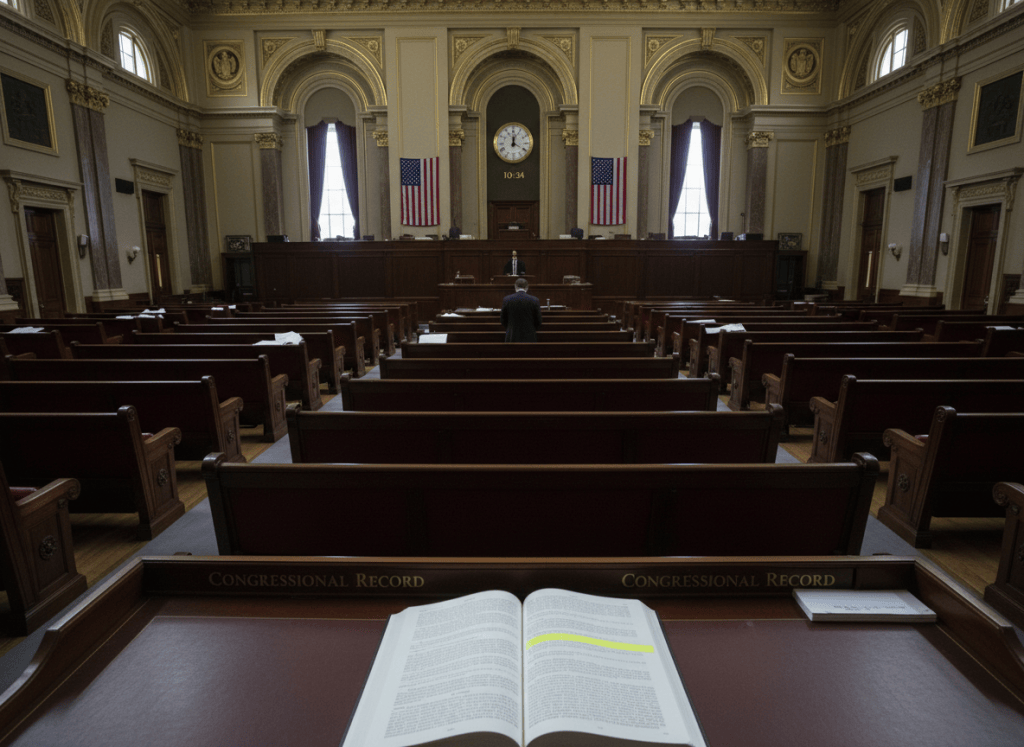
The House convened Monday at 10:30 a.m. and adjourned at 10:34 a.m. Nobody voted, nobody debated, and the Senate stayed home. The real news arrived, as it does in pro forma weeks, stapled to the back of the Congressional Record as executive communications nobody reads aloud.
The most consequential is EC-4755, the FDIC’s transmittal of a major final rule, issued jointly with the OCC, that defines “unsafe or unsound practice” in regulation for the first time. Beginning November 2, a practice qualifies only if it departs from generally accepted standards of prudent operation and is likely to materially harm a bank’s finances or pose a material risk of loss to the Deposit Insurance Fund. A Matter Requiring Attention, the examiner’s formal warning shot, now demands a reasonable expectation of material financial harm or an actual violation of banking law. Everything beneath that line becomes a “supervisory observation,” which a bank may ignore for as many exam cycles as it likes; examiners are forbidden to escalate it on that ground alone.
The agencies assure readers the new standard would have caught Silicon Valley Bank. The same document forecasts that the OCC will issue fewer MRAs and that banks will save more than $100 million a year as a result. The agencies declined to put a number on “likely” or “material,” which leaves the whole edifice resting on examiner judgment, the very thing the rule was written to restrain. They then printed the wrong OCC docket number and ran a correction Tuesday.
Also Buried in the Back Pages
Fewer visits. EC-4756 reports a joint interim final rule doubling the asset ceiling for the 18-month exam cycle to $6 billion, as the 21st Century ROAD to Housing Act directs. When Congress created the extended cycle in 1991, the ceiling was $100 million. Comments close October 14, after the rule has already taken effect.
Douglas retires. EC-4766 covers an MSPB final rule ending mandatory use of the twelve Douglas factors, drawn from a 1981 case against the Veterans Administration, in reviewing penalties for federal employee misconduct. The Board will instead weigh the totality of the circumstances in appeals filed on or after October 5. It carries an OPM docket number because it began as a joint proposal with OPM, one that drew roughly 676 comments in 32 days.
Museums. Rep. Stansbury’s H.R. 10527 would shield the Smithsonian’s independence from executive interference. It is the second such bill in a week, following H.R. 10475, and the American Alliance of Museums has endorsed it. Both sit in House Administration.
Whose office is it. Rep. Griffith inserted a clarification on H.R. 10204, passed September 14, describing the Copyright Office as performing “legislative and executive functions.” The bill strips the Librarian of Congress’s authority over the Register and makes the Register a presidential appointee confirmed by the Senate. Congress is handing an office to the President while insisting it still belongs to Congress.
Acting, again. DHS sent four notifications under the Vacancies Act (EC-4765). The Record discloses that they exist and nothing more, which is how acting appointments prefer it.
Contempt, certified. The Speaker certified Leon Black’s subpoena defiance to the U.S. Attorney for D.C. under H.Res. 1543, after the Oversight Committee voted 41 to 0 and the House agreed without a recorded vote. Whether anyone prosecutes is now the Justice Department’s call.
In four minutes, Congress did nothing. In the fine print, the government agreed to look less often, less closely, and with fewer rules for how it punishes the people doing the looking.

