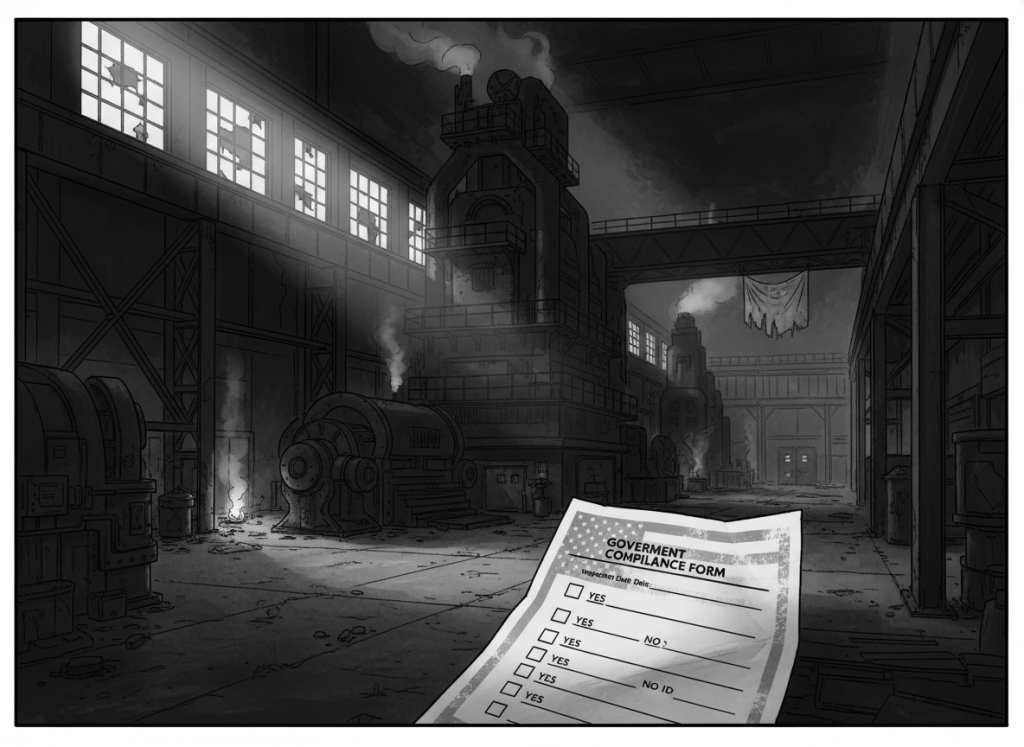
When Congress folded the Build America, Buy America Act into the 2021 infrastructure law, it built in something federal industrial policy rarely bothers with: an actual hard number.
Under Section 70914(a) of the statute, the head of every covered federal agency must ensure that none of the funds for an infrastructure award are obligated unless all the iron, steel, manufactured products, and construction materials used in the project are produced in the United States.
Waivers exist, and 2 CFR Part 184 spells out exactly three grounds for one: public interest, nonavailability, or a cost increase north of 25 percent. That last figure is not a vibe. It is a line item.
The theory behind the law is straightforward enough. BABA was sold as industrial policy with a national security gloss, which is keep federal infrastructure dollars circulating through American steel mills and manufacturers rather than leaking out to the cheapest global bidder, on the logic that a country which cannot make its own rebar in a crisis has a problem bigger than procurement.
Four HUD program offices administer money that counts as infrastructure spending under the statute, which means four separate offices inherited the same legal obligation to check their grantees’ receipts.
You would think an agency handed a bright line would build a fence along it. According to HUD’s own Office of Inspector General, the Department spent more than four years administering this law across those four offices without a single agency wide plan to verify anyone was actually complying with it.
HUD did not designate an official to own BABA implementation until April 16, 2026, and it did so only in the middle of the OIG’s own fieldwork on the subject. Nothing focuses an agency’s mind quite like watching an inspector general take notes.
The Grantee’s Word Is Good Enough
Of the four offices bound by BABA, the Office of Community Planning and Development got there first, applying the law to Community Development Block Grant projects starting in November 2022 and racking up nine approved waivers since. CPD is, by HUD’s own account, the most mature implementation in the building.
Its enforcement mechanism is a checkbox.
Grantees drawing funds through CPD’s Integrated Disbursement and Information System simply indicate whether BABA applies to their activity and self certify compliance. There is no independent verification layer sitting underneath that certification.
BABA only gets a second look if a risk assessment happens to flag it, which means the government’s flagship domestic sourcing law rides on the same honor system CPD uses for everything else, applied to a statute that exists because Congress specifically did not trust the market to sort this out on its own.
2 CFR § 200.322 already required a general domestic preference for federal financial assistance procurements before BABA arrived. BABA was supposed to be the version with teeth.
Everyone Else Just Waited
If CPD is the office that built a system and then quietly hollowed it out, the other three did not build anything at all. The Office of Public and Indian Housing spent years telling the OIG it was waiting on OMB for guidance on how to structure compliance oversight, an answer that stops sounding like patience and starts sounding like a strategy somewhere around year three of a law that took effect in 2021.
The Office of Multifamily Housing Programs reported zero waiver requests and zero compliance issues, a data point HUD’s own management framed as evidence of a healthy program rather than what it also could be: a program that has never looked closely enough to find a problem.
The Office of Lead Hazard Control and Healthy Homes gets a pass by design rather than diligence, since its grants have simply never crossed the simplified acquisition threshold that triggers BABA in the first place. Three different offices, three different excuses for the same underlying fact: nobody was checking.
Meanwhile OMB’s implementation guidance has been on the books since October 2023, and the Made in America Office exists specifically to standardize waiver review across agencies so that a law meant to apply uniformly does not turn into four unrelated fiefdoms. HUD’s fiefdoms did manage to coordinate on one thing: HUD’s Office of the Chief Financial Officer processes every waiver request that goes out the door, posting each proposed waiver for a public comment period before forwarding it to the Made in America Office for final review.
That is a genuinely sound piece of process design. It also means HUD built a working pipeline for the rare case when a grantee admits it cannot comply, while leaving the far more common case, whether a grantee complied at all, to nobody in particular.
The July 2027 Excuse
The OIG’s fix is almost insultingly modest: designate one accountable official, and have each office write down an actual monitoring policy. HUD agreed to the first part immediately, once the person doing the agreeing had already been appointed mid audit. The second part is where the report gets its best line, buried in Appendix A.
The Office of Multifamily Housing Programs, responding in writing, told the OIG it does not intend to call out BABA compliance separately from every other regulatory requirement grantees already certify to, arguing that a standalone BABA certification would be duplicative on top of the general certifications already required under 2 CFR § 200.322 and the noncompliance remedies already available under 2 CFR §§ 200.339 through 200.343.
That is a coherent legal argument. It is also, functionally, an office explaining why it would prefer not to build the one thing the inspector general asked for, and it set a target completion date of July 2027 to write guidance it has apparently already decided will not say much.
The Office of Lead Hazard Control and Healthy Homes made a nearly identical case in Appendix B, while simultaneously agreeing to join a memorandum of understanding making some other office responsible for the coordination.
None of this means BABA is a bad law, or even that HUD’s grantees are quietly larding their construction sites with foreign steel. Nobody in the report claims that, because nobody checked closely enough to claim anything.
That is the actual finding here, dressed up in the government’s preferred euphemism of “limited program office monitoring.” A domestic sourcing law with a hard 25 percent ceiling and a specific enforcement office in OMB got implemented across a cabinet agency for the better part of half a decade on the strength of a checkbox, a waiting list, and a threshold nobody has crossed yet.
The law had teeth. HUD just never got around to installing the jaw.
 Bureaucracy Times