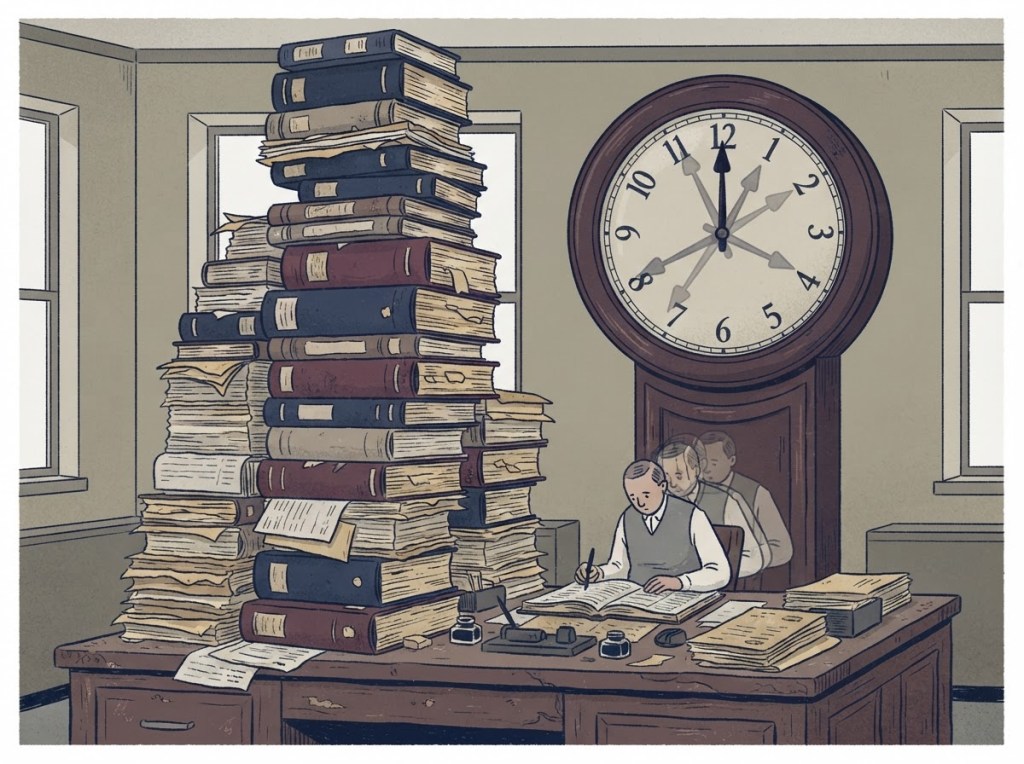
The IRS has relied on a $29.8 billion accounting workaround to produce clean financial statements for 27 consecutive years. GAO keeps finding the same underlying deficiency. No completion date has been set for fixing it.
The Internal Revenue Service collected trillions of dollars in federal taxes during fiscal year 2026, earned another favorable financial audit, and continued relying on a labor-intensive accounting workaround to compensate for deficiencies that federal auditors have documented for decades.
According to the Government Accountability Office’s November 12 financial audit, the IRS recorded approximately $29.8 billion in summary-level accounting adjustments during fiscal year 2026 to correct classification errors involving unpaid tax assessments.
The adjustments were not evidence of $29.8 billion in missing revenue, fraud, or improper payments. Rather, they were corrections needed to produce reliable financial statements despite limitations in the agency’s underlying accounting systems.
That distinction is essential. It is also where the accountability questions begin.
GAO concluded that the IRS’s financial statements were fairly presented in all material respects. The agency received an unmodified audit opinion for the 27th consecutive year. Nevertheless, auditors continued to identify a significant deficiency involving the systems used to account for federal taxes receivable and other unpaid assessments.
The IRS can produce reliable year-end financial statements. What it still cannot consistently produce, according to GAO, is the timely, reliable, and complete transaction-level information needed to properly classify unpaid assessments and manage those balances throughout the year.
After more than three decades of federal oversight, the agency continues to rely on compensating procedures while the underlying modernization effort remains unfinished.
A $29.8 Billion Accounting Correction
The problem centers on how the IRS records and classifies taxes that have been assessed but remain unpaid.
Federal accounting standards distinguish among taxes receivable, compliance assessments, and write-offs. Those categories serve different purposes and determine how unpaid assessments are reflected in federal financial reporting.
Taxes receivable generally represent amounts supported by taxpayer acknowledgment or a court determination. Compliance assessments include proposed amounts that have not been similarly established. Write-offs represent assessments for which the IRS does not expect further collections.
These distinctions matter because not every unpaid assessment qualifies as an asset on the government’s financial statements.
GAO found that the IRS’s systems continued to lack the capabilities necessary to classify and report these amounts reliably without additional procedures.
To compensate, the agency used a manually driven statistical estimation process to identify classification errors and make adjustments.
During fiscal year 2026, those adjustments totaled approximately $29.8 billion.
The process worked well enough to support the agency’s audited financial statements. But GAO emphasized that the workaround does not provide management with readily available, reliable information about unpaid assessments on a daily basis.
In other words, the IRS can reconcile the figures sufficiently for its annual audit, but the underlying information is not consistently available in the form needed for routine financial management.
The agency has successfully developed a way to work around the problem. Eliminating the need for that workaround has proven considerably more difficult.
A Problem That Predates the Modern IRS Technology Debate
The deficiency did not emerge during the latest round of federal technology modernization.
GAO’s examination of IRS financial management stretches back to its first audit of the agency’s fiscal year 1992 financial statements, published in 1993.
Subsequent audits documented persistent difficulties involving unpaid tax assessments, taxpayer-account information, and the systems supporting financial reporting.
By the early 2000s, federal auditors were already describing the IRS’s reliance on labor-intensive compensating procedures to prepare reliable financial statements.
The problem was sufficiently serious to be classified as a material weakness in internal control over financial reporting.
Over time, however, the IRS made improvements.
In fiscal year 2018, GAO determined that progress in the agency’s accounting processes and controls had reduced the severity of the unpaid-assessments problem. Auditors downgraded the finding from a material weakness to a significant deficiency.
That distinction should not be overlooked. A material weakness indicates a reasonable possibility that a material financial misstatement will not be prevented or detected and corrected promptly. A significant deficiency is less severe but remains important enough to warrant the attention of agency leadership.
The downgrade represented meaningful progress, not a declaration that the underlying problem had been eliminated.
In its 2019 management report, GAO issued Recommendation 19-01, directing the IRS to address remaining weaknesses in the classification and maintenance of unpaid assessments and the controls needed to prevent or correct significant taxpayer-account errors.
The recommendation followed earlier corrective efforts, including Recommendation 10-04, which GAO closed after determining that improvements had sufficiently addressed its original objectives.
The historical record therefore does not describe three decades of complete inaction. It documents recurring deficiencies, successive corrective efforts, measurable improvements, and an underlying systems problem that has persisted despite them.
Corrective Actions Delayed by Competing Priorities
The history becomes more revealing when examining GAO’s follow-up on Recommendation 19-01.
In its published recommendation tracking, GAO reported that the IRS had placed corrective actions on hold because of competing priorities.
The recommendation remained open as of September 30, 2025.
That disclosure raises questions not answered by the latest financial audit.
Which priorities displaced the corrective work? How long were the actions deferred? Who approved the changes? And what effect, if any, did those decisions have on the timetable for eliminating the accounting deficiency?
The public record reviewed for this article does not establish that corrective work was continuously suspended, nor does it establish the cost of any delay.
It does establish that the problem remained unresolved.
In fiscal year 2026, GAO again reported that the IRS needed compensating procedures to produce reliable financial information concerning unpaid assessments.
The agency’s own financial report acknowledged the continuing deficiency and described ongoing efforts to modernize the affected systems.
There was, however, one conspicuous omission from the corrective-action discussion: a final completion date.
Modernization Without a Final Deadline
In its fiscal year 2026 Agency Financial Report, the IRS stated that it was continuing to implement a plan to modernize financial systems and improve the classification, reliability, and reporting of unpaid-assessment information.
The agency explained that these corrective actions depend on broader technology modernization efforts.
A final implementation date, the IRS reported, had not yet been determined.
That leaves an important distinction between having a modernization plan and establishing when the longstanding deficiency will actually be resolved.
The IRS has demonstrated that it can make progress on financial controls. GAO’s fiscal year 2025 management reporting documented the closure of numerous earlier recommendations, even as other deficiencies remained outstanding.
Yet the unpaid-assessments issue continues to affect the agency’s compliance with federal financial-management requirements.
Under the Federal Financial Management Improvement Act of 1996, federal agencies are expected to maintain financial management systems that substantially comply with applicable systems requirements, federal accounting standards, and the U.S. Standard General Ledger at the transaction level.
For fiscal year 2026, the IRS concluded that its systems substantially complied with the applicable accounting standards and Standard General Ledger requirements.
It also concluded that those systems did not substantially comply with federal financial management systems requirements because of the unpaid-assessments deficiency.
GAO reached the same conclusion.
This does not negate the agency’s favorable financial audit opinion. It establishes that reliable year-end reporting and compliance with underlying financial-management systems requirements are different measures of accountability.
The IRS passed one test while continuing to fall short on another.
Technology Workforce Changes Add Another Concern
The modernization challenge also exists against a backdrop of substantial changes to the IRS technology workforce.
In its fiscal year 2026 auditor’s report, GAO cited a Treasury Inspector General for Tax Administration finding that IRS information technology staffing declined 42 percent between January 2025 and January 2026.
The reduction resulted from workforce reductions, reassignments, and restructuring efforts.
GAO also noted significant changes to the IRS’s technology organization and information-security management processes during fiscal years 2025 and 2026.
Auditors cautioned that management would need to monitor risks associated with those changes while continuing to strengthen information-system controls.
The report does not establish that the workforce reductions caused or worsened the unpaid-assessments accounting deficiency. That deficiency predates the staffing changes by decades.
Nor does it establish that the reductions delayed a particular modernization milestone.
Nevertheless, the findings raise a legitimate management question: How will the IRS complete longstanding financial-system repairs while adapting to substantial changes in the workforce responsible for maintaining and modernizing its technology?
That question is especially relevant when the agency has not established a final implementation date for correcting the deficiency.
A Favorable Audit Is Not the End of the Story
The IRS’s financial reporting record deserves acknowledgment.
GAO found that the agency’s fiscal year 2026 and 2025 financial statements were fairly presented in all material respects. Auditors also concluded that the IRS maintained effective internal control over financial reporting in all material respects as of September 30, 2026.
GAO reported no reportable noncompliance in its testing of selected applicable legal provisions for fiscal year 2026.
Those findings are meaningful. They demonstrate that the agency’s accounting procedures, including compensating controls, have enabled it to satisfy demanding annual audit requirements.
But GAO also warned that the continuing deficiency creates the possibility of misstatements in unaudited financial information reported internally or externally.
That warning goes to the heart of the distinction between producing a reliable annual financial statement and maintaining reliable financial information throughout the year.
For an agency responsible for administering trillions of dollars in federal revenue, both functions matter.
The $29.8 billion in accounting adjustments should not be mistaken for lost taxpayer money. It is, however, a measure of the substantial corrections required in fiscal year 2026 to compensate for classification errors in the underlying data.
And it is another reminder that a longstanding accounting workaround remains necessary.
The Questions That Remain
Bureaucracy Times submitted a media inquiry to the IRS on November 16, requesting clarification on three issues: the modernization projects and milestones intended to resolve the deficiency, the competing priorities that previously delayed corrective actions, and the administrative costs and operational limitations associated with the statistical estimation process.
An agency response was pending when this draft was prepared.
The questions are not whether the IRS can produce auditable financial statements. GAO has repeatedly established that it can.
The questions are why the underlying systems still require substantial compensating procedures, what those procedures cost to maintain, and when the agency expects to complete the repairs.
More than three decades after GAO began documenting weaknesses in IRS financial management, the agency has made progress, obtained favorable audit opinions, and corrected numerous control deficiencies.
Yet the central accounting problem remains.
The IRS has demonstrated that it can make the numbers work for its annual audit. What remains unanswered is when its underlying systems will be able to do so without the longstanding workaround.

