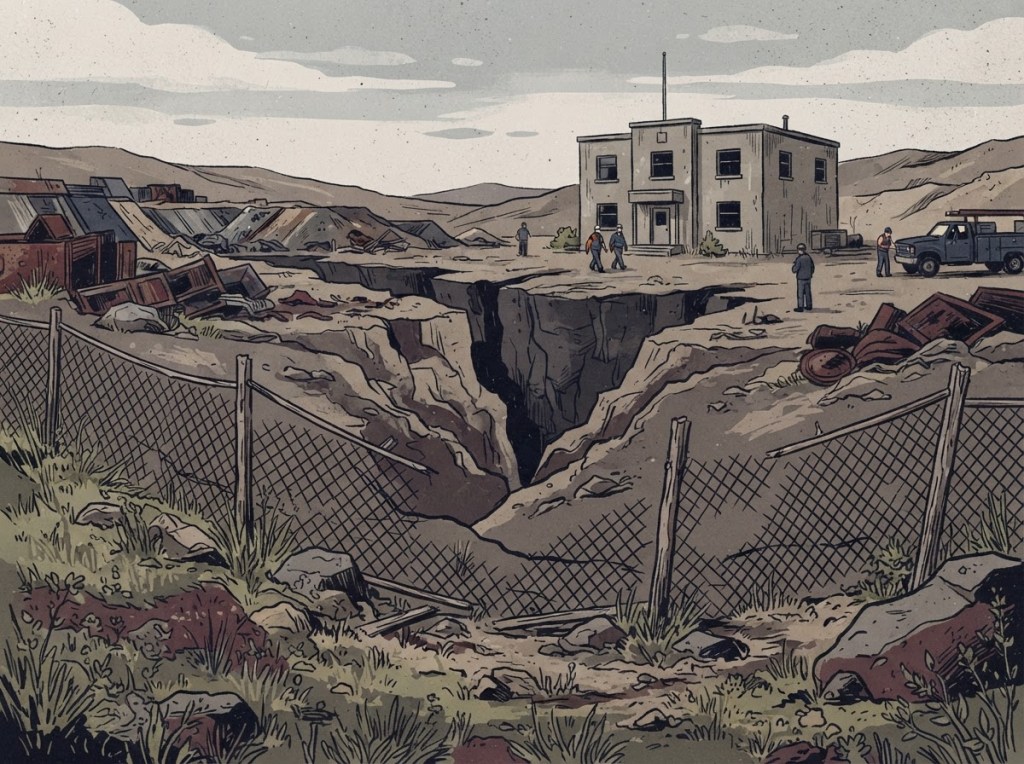
A GAO audit and Interior’s FY2027 budget show a shrinking oversight agency, a widening funding gap, and a scorecard that measures the cleanups that get finished, not the ones that don’t.
The federal office that polices coal mine cleanup has lost more than a third of its workforce. Its budget request for next year doesn’t say so.
A Government Accountability Office report, dated October 15 and released November 12, found that staff at the Office of Surface Mining Reclamation and Enforcement fell from 408 in 2024 to 265 by May 2026. That is a 35 percent drop.
The causes were deferred resignations, a hiring freeze and restructuring at Interior.
GAO also found that Interior did no strategic workforce planning before the cuts. As of August 2026, it still hadn’t assessed what OSMRE can do with the people it has left.
What the budget says
Interior’s FY2027 request puts OSMRE at $285.8 million, supporting 324 full-time equivalents. That is the same number budgeted for 2026.
Budgeted positions and people on payroll are different measures. But a gap of roughly 59 is hard to miss.
The request also “increases” Title V grant funding to states and Tribes. Those grants pay for the state programs that regulate nearly every coal permit in the country.
The increase is from $63.7 million to $65.4 million.
What the audit says
OSMRE’s own analysis recommended $80.4 million in state and tribal grants for FY2026. States received $63.7 million, or 79 percent.
The gap has grown from $4.2 million in FY2021 to $16.7 million. This year, 18 of 26 states and Tribes got less than 80 percent of their recommended amount.
Even the requested $65.4 million is below the $68.6 million distributed in FY2021.
Officials from nearly all 23 state programs told GAO that funding is a challenge. Coal production fees, a main revenue source for some states, fall along with production.
The oversight line
One line in the request goes the other way. “State Program Evaluation,” which funds OSMRE’s oversight of those state programs, drops from $8.6 million to $6.5 million. That is a cut of about 25 percent.
The budget’s stated reason for the grants is that they provide “the resources necessary to support coal production during a national energy emergency.” Reclamation is not mentioned in that sentence.
GAO’s findings show where the strain is. OSMRE met its inspection targets in all but four states in evaluation year 2025. Officials in several offices expect oversight capacity to decline.
OSMRE last conducted a national study in 2010. Officials told GAO they likely won’t have capacity for another.
The appendix
The numbers that may matter most are in Appendix V, not the report’s main text.
The body notes that OSMRE beat its training target of 500 people in FY2024. The appendix shows 697 trained that year.
In FY2025, the in-person count was 34. The target was 550.
GAO says OSMRE shifted to more online training because of travel limits and reduced capacity. The appendix tracks in-person training only.
Other numbers look strong at first. In FY2025, 94.2 percent of inspectable units were free of off-site impacts, against a 93 percent target. Acres released from final bonds beat the target by about 11 percent.
But the Phase III target had been lowered from 38,980 acres in FY2024 to 34,542 in FY2025. And one target for forestry reclamation has sat at 41 percent for five years. Actual results ran from 59 to 97 percent.
The share of bonded acres reclaimed to their intended use since 1977 is 49.2 percent. That is exactly its target.
What isn’t measured
All four of OSMRE’s primary measures track sites where operators finished the work or requested a bond release.
None tracks how long a mine has sat idle since its last coal was produced. GAO found 56 percent of the 5,247 permits, 2,936 in all, had no reported production since 2000. Hundreds of those last produced coal more than 25 years ago and have not been fully reclaimed.
GAO says that gap leaves OSMRE without key information on which sites risk becoming a financial burden for governments.
OSMRE also hasn’t sent Congress its required annual report since FY2020. Officials said they have had other priorities. In June, they said a report covering FY2025 was being drafted.
GAO’s four recommendations include workforce planning, faster review of state program amendments, a measure for time since last production, and resuming the annual reports. GAO says Interior offered only technical comments.
In a statement to Bureaucracy Times, a Department of the Interior spokesperson said, “The Office of Surface Mining is reviewing the findings and recommendations outlined in the recent Government Accountability Office report on coal mine reclamation.” The spokesperson said the bureau remains committed to its responsibilities under the Surface Mining Control and Reclamation Act, including protecting communities, supporting beneficial post-mining land uses, and safeguarding taxpayer resources. Interior did not specify which recommendations it would implement, whether corrective action had begun, or when the review would conclude.
Inquiries have been directed to Interior and OSMRE. Among the questions: how many people OSMRE employs today against the 324 positions budgeted, when the overdue annual report will be released, and why oversight funding is being cut while state grants are tied to coal production.

