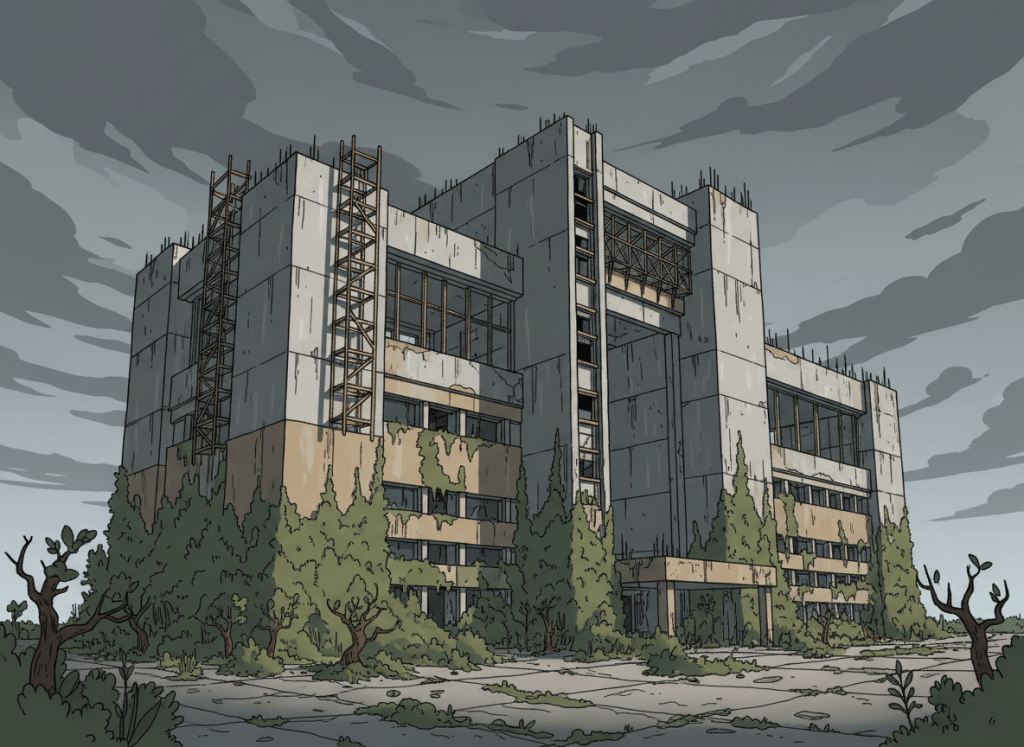
The Veterans Health Administration’s capacity for self-inflicted institutional failure remains as reliably catastrophic as ever. A new Office of Inspector General report, released in September 2026, documents how five construction and maintenance projects at the Fayetteville VA Medical Center in Arkansas went from a collectively budgeted $34.5 million to approximately $100 million in actual or projected costs, with delays ranging from one year to more than seven years beyond their scheduled completion dates. As of January 2026, only one of the five projects had been finished. The others languished in various states of partial construction, abandonment, or perpetual redesign.
The core allegation that prompted the OIG investigation, submitted via hotline complaint in March 2024, was straightforward: the facility was chronically unable to execute basic construction management tasks. Three of the four allegations were substantiated. The fourth, regarding contract terminations, wasn’t needed; the more damning finding was that the facility didn’t even fail to terminate contracts properly, because it managed not to terminate any construction-related contracts at all between 2019 and 2024, suggesting a different species of dysfunction entirely.
The OIG report identifies the underlying cause with surgical precision: the engineers delegated as Contracting Officers’ Representatives (CORs) at Fayetteville didn’t do their jobs. They failed to provide architectural and engineering firms with complete VA design and physical security requirements. They handed construction contractors statements of work so vague that bidders peppered the facility with clarifying questions that went unanswered or received replies that prompted yet more questions. None of the three CORs interviewed for the investigation had taken formal training on developing statements of work, despite this being identified in VHA guidance as a primary responsibility. No formal design review process existed, despite the Federal Acquisition Regulation requiring CORs to maintain records of their design approvals. In lieu of institutional process, the facility’s engineering team conducted design reviews via email and spreadsheet, often without signatures, frequently without documentation of which engineer actually did the reviewing.
This is not complexity masquerading as bureaucracy. This is bureaucracy pretending to be competence.
The Geometry of Delay
The mathematics of Fayetteville’s construction failures follows a peculiar pattern: small initial omissions compound into massive downstream costs and schedule disruptions. Consider the inpatient mental health building, the facility’s flagship project. Originally budgeted at $9.5 million with a planned October 2018 completion date, it remained under construction as of January 2026, more than seven years late, at an estimated final cost around $19 million. As the OIG investigation traced the project’s trajectory, the story of how a straightforward 21,056-square-foot psychiatric facility became a near-decade-long institutional migraine emerged from the contract record.
The architectural and engineering design did not comply with VA physical security standards because the CORs writing the initial design contract omitted VA-specific requirements from the statement of work. This wasn’t a disagreement about standards or a calculated decision to incorporate standards later. The VA design requirements simply weren’t communicated. When construction bidders reviewed the design documents and began asking contractors’ reasonable questions about security specifications, lighting minimums, electrical connections, piping, stairwells, and elevator shafts, the facility’s response was essentially: we’ll figure it out. The COR’s responses were vague enough that contractors asked follow-up questions, some of which went unanswered. After the contract was awarded at $12.4 million, well above the $9.5 million budget, construction began. Then the contractors discovered the design didn’t meet VA standards. Automatic door operators required for patient accessibility throughout the building were absent. An over-the-door alarm system for suicide prevention in patient rooms was missing. The design lacked proper gaps between exterior masonry and walls, a deficiency that led to a legal dispute and cost the facility $1.8 million in contractor time spent resolving the noncompliance.
In total, the mental health building accumulated 34 contract modifications, of which 16 related directly to design errors and omissions. Another project, the logistics area and sterile processing service renovation, began with a $2.7 million budget and 6,300 square feet of intended space. Architects eventually informed the facility that the selected location lacked sufficient square footage to meet the project’s design requirements. Rather than catching this during the planning phase, the discovery triggered a two-month work stoppage while the facility and its architectural firm argued about scope. When they agreed to expand the space, the project’s footprint ballooned to 13,500 square feet. By January 2024, the facility decided to split the project in two. The original $2.7 million project is now projected to cost $28.9 million total, with completion dates pushed five years into the future. The sterile processing component alone now carries a $24.8 million price tag.
The laundry facility renovation followed a similar arc, though with more dramatic physical consequences. The original $1.9 million project eventually cost over $8 million. During construction, water damage was discovered in the building’s concrete floor; damaged concrete and rebar had to be removed and replaced before any other work could proceed. This discovery suggests contractors were bidding on a site assessment that had no apparent connection to what was actually in the ground. The statement of work didn’t adequately describe existing site conditions, so contractors bid on a phantom project, then discovered the real one halfway through construction.
The Accounting of Incompetence
The financial impact extends beyond the direct project costs. The facility spent over $1.1 million from its general operations funds on indirect expenses related to construction delays. When the inpatient mental health building delayed its opening, furniture purchased for the facility in 2020 needed warehousing. The facility paid a contractor $52,000 in December 2022 to store furniture for a building that still wasn’t ready for occupancy. Eventually, the facility moved the furniture to on-site storage to reduce costs further. Storage, surveillance, and laundry operations were temporarily outsourced or relocated due to construction delays, creating a cascading series of workarounds, each carrying its own budget impact.
The three projects affected by cost-estimate variances all exceeded independent government cost estimates by more than 20 percent. The mental health building’s estimated construction cost was $8.2 million; the awarded contract was $12.4 million. The inpatient medical surgery unit’s estimated cost was $7.8 million; the awarded contract was $11.7 million. The logistics renovation estimate was $1.8 million; the awarded contract was $4.1 million. The OIG notes that while VA has no established criteria for acceptable variance between estimates and contract awards, significant deviations result in schedule delays while additional budget approvals are sought.
There’s a damning detail embedded in the OIG’s analysis of independent government cost estimates. These estimates are supposed to be developed by CORs and based on prior project information, market research, anticipated direct and indirect costs, and design review. They’re meant to serve as a baseline against which to evaluate whether a contractor’s proposed price is reasonable. But the Fayetteville CORs were developing these estimates without having received training on how statements of work affect cost estimates, because training on developing statements of work simply wasn’t part of their onboarding. One might reasonably ask: if your staff doesn’t know how to write clear project specifications, how can they be expected to estimate what those (unclear) specifications should cost?
The Institutional Abdication
The most corrosive finding in the OIG report concerns what the VA system failed to catch before irreversible harm occurred. VISN 16, the regional oversight body, explicitly offered technical assistance through a construction management support contract designed to help facilities identify architectural and engineering design deficiencies. The Fayetteville medical center declined to use it. The facility’s chief of engineering service said the center couldn’t identify a “resource gap” that the contract would fill. Yet three of the projects reviewed by the OIG were either in the design phase or early construction phases at the time this assistance was available. The most charitable interpretation is that the facility’s leadership couldn’t recognize its own incompetence; less charitable interpretations are equally plausible.
The OIG made four recommendations. The facility concurred with all of them. One recommendation has been closed based on documentation provided by the facility showing that design review procedures are now being tracked in the VA’s Support Service Center Capital Assets database. Recommendations 2, 3, and 4 remain open, pending evidence that the facility has actually implemented meaningful changes to how engineering staff are trained, how independent government cost estimates are developed, and how design reviews are documented and approved.
Here’s what the OIG report demonstrates, in the accumulated weight of its findings: the VA possesses process frameworks, oversight structures, and technical guidance that should prevent exactly this kind of failure. The fact that none of these prevented failure isn’t an indictment of the systems themselves; it’s evidence of how thoroughly an institution can hollow out its own operational capacity. Training exists but isn’t taken. Technical assistance is offered but declined. Design standards are documented but not communicated. Contract requirements are supposed to be reviewed but are circulated via email and spreadsheet instead. The machinery of federal construction management is present. The people running it simply chose not to operate it.
As of July 2025, the water storage facility project remained in limbo after three unsuccessful contract solicitations. The facility planned to resolicit the project in 2027, if funding was received in 2026. That’s the institutional pace at which the VA operates: catastrophic delay, followed by planning to attempt delay again, followed by a faint hope that future budget cycles might permit another try.
The veterans served by this facility waited for facilities that should have been ready six years ago. They’re still waiting. The OIG report documents why, in exhausting bureaucratic detail. The question now is whether anyone at the Veterans Health Administration will actually read it.
 Bureaucracy Times