Wednesday, April 15, 2026, arrived with the same rhythmic, industrial thrum that characterizes the daily output of the United States Government Publishing Office.
On this particular morning, Volume 91, No. 72 of the Federal Register was birthed into the archives as a 253-page compendium of administrative minutiae that functions as the cold, beating heart of the American state.
To the uninitiated, it is a sterile record of “procedural regulations” and “notices to the public.” To the seasoned observer, it is the Leviathan’s ledger, a document of profound strategic irony where the state simultaneously manages the creeping extinction of a deep-sea predator and the multi-billion-dollar financing of global kinetic violence.
Authenticated by the seal of the National Archives and Records Administration, the document carries the motto Littera Scripta Manet, or the written word remains. It is a chilling sentiment when one realizes that the written word is often all that remains of the stability and the species that the government purports to protect.
Up In Arms
Here, the Office of the Federal Register performs its role as the official serial publication of a superpower that treats the font requirements on a $190 helicopter emergency exit label with the same dispassionate, bureaucratic gravity it applies to the distribution of 500-pound general-purpose bombs.
The architecture of global stability, as deconstructed through the Department of Defense’s recent arms notifications, reveals a vision of peace built entirely upon the machinery of high-tech attrition. The Defense Security Cooperation Agency, invoking the strategic “logic” of the Arms Export Control Act, has recently authorized a staggering influx of weaponry to the Middle East and Europe, framing these transfers as essential “forces for political stability.”
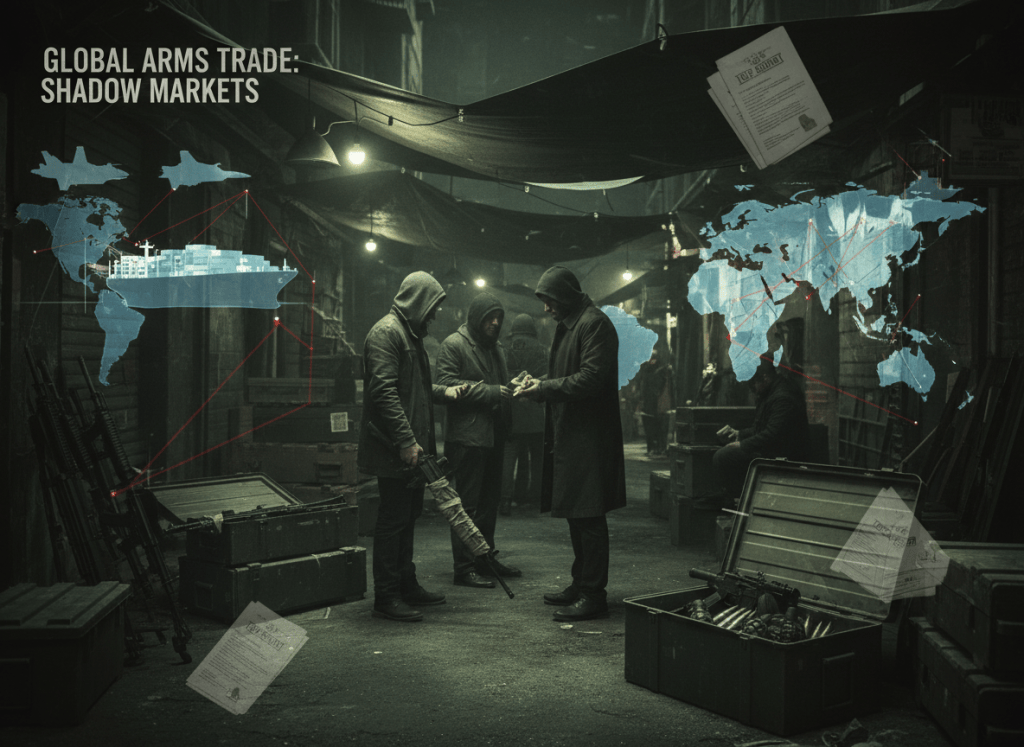
At the summit of this recent spree is a $9 billion transaction for the Kingdom of Saudi Arabia. The deal involves 730 PATRIOT Advanced Capability-3 (PAC–3) Missile Segment Enhancement interceptors, manufactured by Lockheed-Martin. These are described with clinical admiration as “hit-to-kill” kinetic interceptors, featuring upgraded guidance software and modified lethality enhancers.
The bureaucratic theatrics are on full display as the Pentagon asserts that this massive depletion of sophisticated hardware will have “no adverse impact on U.S. defense readiness.” This $9 billion intercept is merely one entry in a ledger defined by bureaucratized violence. It sits alongside a $6.9 billion munitions package for Israel that includes 10,000 BLU–111 500-pound general-purpose bombs, and a notification for Belgium concerning the acquisition of eleven additional F-35 Joint Strike Fighters.
While the initial draft of history might lose itself in the numbers, the reality is that the total Belgian F-35 program has now swelled to an estimated $9.83 billion. It is a world where security is measured in “all-up-rounds” and “unitary high explosive” missile pods, exported with the sterile precision of a grocery receipt.
Nothing to See Here
While the government exports this machinery of stability abroad, it is busy “modernizing” the domestic landscape of risk through a series of deregulatory maneuvers. The Nuclear Regulatory Commission (NRC) has finalized a rule that significantly alters the mandatory hearing process for reactor licensing, citing the mandates of the ADVANCE Act of 2024 and Executive Order 14300. In an exercise of pure regulatory theater, the NRC is now providing “increased flexibility” by effectively severing the historical link between public hearings and the actual issuance of a license.
By removing specific safety and environmental findings from the presiding officer’s requirements, the agency ensures that public oversight is no longer on the “critical path” to license issuance. This drive for “efficiency” is a calculated meltdown of regulatory friction, designed to shorten review times by shedding the very findings that once justified the state’s permit. This “streamlining” of nuclear risk stands in biting contrast to the Federal Aviation Administration’s simultaneous obsession with the microscopic.
Label the Issue
While the NRC washes its hands of mandatory environmental findings, the FAA is mandating $190 labels for helicopter emergency exits across 1,213 aircraft and demanding repetitive $1,955 inspections of fuselage frame foot joint connections for a mere twenty-two regional jets. The Leviathan is terrified of a loose fuselage joint in a regional commuter but remains perfectly comfortable “flexing” the mandatory safety findings for a nuclear reactor.
S-E-Caesar’s Palace
This appetite for streamlined risk finds a perfect mirror in the financial markets, where the Securities and Exchange Commission (SEC) is facilitating the transformation of the stock market into a 23-hour retail casino.
Under the new “23/5” trading model, exchanges like Nasdaq and Cboe EDGX are opening “Night Sessions” from 9:00 p.m. to 4:00 a.m. ET, ostensibly to satisfy the demand for “market accessibility” from retail investors in the Asia Pacific region. However, this midnight casino operates in a shadow world where the Fedwire Funds Service is closed and most banks are dark, leaving investors to navigate increased counterparty and settlement risks.
The SEC acknowledges with a bureaucratic shrug that these sessions will be characterized by lower liquidity, higher volatility, and wider spreads. Even more damning is the fact that the standard regulatory infrastructure and volatility control mechanisms that protect the public during the day are conspicuously absent during these nocturnal hours. To join this game, market participants must purchase separate, dedicated ports, the fees for which are hidden in “subsequent rule filings”.
To Grow or Not To Grow
This active facilitation of a global gambling floor for retail investors is occurring even as the Federal Trade Commission (FTC) preens over a $750,000 settlement with TruHeight, a company that peddled “height-growth” supplements for children.
The FTC chased down $750,000 in fake reviews, a sum that constitutes a rounding error in the Saudi missile deal, to protect parents from the fraud of a six-inch growth spurt. The state maintains a posture of hyper-vigilance against the charlatans of “fake growth” while building the actual infrastructure for “real risk” in a 23-hour retail investor casino that lacks basic volatility controls.
Tope of the Food Chain
The final absurdity, the peak of the Leviathan’s ledger, is revealed in its sudden, agonizing concern for the Tope Shark. Amidst the shipping of 10,000 bombs and the streamlining of nuclear hearings, the National Marine Fisheries Service has dedicated fifty pages of the Federal Register to the plight of Galeorhinus galeus.
The populations in the Southwest Atlantic and Southern Africa are being proposed for listing as threatened, and the data is a testament to biological tragedy. In Argentina, the Tope Shark has seen a 99.3% reduction in abundance over three generations. In Africa, the population has collapsed to a mere 10% of its carrying capacity.
The ledger describes the “deficient” enforcement in Brazil and the lack of catch limits in South Africa with a level of detail that borders on the fetishistic. Most poignant is the fact that the African population is physically trapped; as equatorial waters warm, these sharks are unable to shift their distribution poleward because the African continent simply ends. They have nowhere to go.
The Tope Shark, with its three-year reproductive cycle and its slow intrinsic rate of increase, is a metaphor for a natural world that cannot keep pace with the “hit-to-kill” agility of modern industrial capitalism.
The paradox is complete: the government spends dozens of pages mourning a shark that is physically unable to escape its environment, while simultaneously “streamlining” the hearings that might protect our own environment from nuclear mishaps.
Wrapping Up
We live under a status quo that monitors $190 helicopter labels with sterile, surgical precision while authorizing the $9 billion machinery of war for a Major non-NATO Ally. The Leviathan knows the exact cost of a fuselage inspection but has lost the ability to value the life it claims to govern.
As Volume 91, No. 72 of the Federal Register is filed away, it leaves a permanent record of a system that is impeccably organized and fundamentally insane. It is a world where we count the sharks as they disappear, documenting their inability to shift poleward with scientific exactitude, even as we ship the very bombs that will ensure the written word remains the only thing left of the stability we once claimed to export.
The ledger remains, a testament to a state that is hyper-vigilant about fake height reviews, but perfectly comfortable with the very real extinction of everything else.
- The Pentagon’s Own Gas Station Is Losing Money on Every Gallon
- The $215 Million Quantum Race That Took Washington a Decade to Build
- One Email Can Still Turn the National Labor Relations Board Off
- Three Years Running, America’s Postal Watchdog Fails Its Own Report Card
- Four Audits, One Camera, and the Grade TSA Won’t Show You

