A Bank Built for a Deal That Never Closed
A fair objection runs through this series: doesn’t the whole idea of the government owning market-facing financial entities sound a little like something out of the Soviet Union? The Export-Import Bank offers an answer nobody could have planned better. It was created by Franklin Roosevelt’s Executive Order 6581 on February 2, 1934, with the immediate goal of financing American exports to the Soviet Union, whose Communist controlled financial institutions would not extend credit for such purchases, according to a history of the Bank published by the Foreign Policy Association. The deal never happened. By July 1934, the Bank’s lending authority had been expanded to cover any part of the world except Russia, according to EXIM’s own historical timeline, and its first actual transaction was a 3.8 million dollar loan to Cuba the following year. Congress made the Bank an independent agency in 1945 and it has spent the ninety-two years since financing exports to everyone except the country it was originally built for.
Boeing’s Bank, By the Numbers
The Bank’s critics have called it Boeing’s Bank for decades, and the most recent watchdog report makes the nickname difficult to argue with. A March 2026 review by EXIM’s own inspector general found that Boeing aircraft accounted for 83 percent of the Bank’s entire aircraft sector portfolio exposure between fiscal years 2019 and 2024, with the Boeing 737 alone making up 29 percent of that exposure, according to the OIG’s review of the Bank’s aircraft concentration risk. The same review found that transactions large enough to require full Board authorization made up less than 9 percent of aircraft deals by count but accounted for roughly 6.8 billion dollars in new exposure, meaning the Bank’s biggest financial bets are concentrated in a handful of large aircraft deals overseen by a Board that has not always existed in functioning form.
GAO has been flagging fraud risk management gaps at EXIM on a recurring basis since at least 2018, issuing reports in 2018, 2022, and again as recently as 2025. That is the same watchdog raising the same category of concern across three separate presidential administrations without the underlying issue getting fully resolved.
The Four Years Nobody Could Approve a Deal
EXIM’s charter has to be renewed by Congress periodically, and for most of its history that renewal happened quietly, often without even a recorded vote. That changed in 2015. Conservative groups including the Koch network seized on the Bank’s routine reauthorization as a target, arguing it amounted to corporate welfare that distorted private markets, and for the first time in the Bank’s 81 year history, its charter was allowed to lapse on June 30, 2015, according to contemporaneous reporting on the fight. Congress reauthorized the Bank that December, but the more consequential damage had already been done to its governance: the Senate did not confirm enough Board members to maintain a quorum from 2015 until 2019, which meant EXIM legally existed but could not approve any transaction above roughly 10 million dollars requiring Board sign off, according to a Congressional Research Service overview of the Bank’s reauthorization history. For four years, an agency whose primary value proposition is financing large aircraft and infrastructure deals could not actually finance large aircraft and infrastructure deals, not because Congress killed it, but because Congress simply declined to staff it.
Ten Billion Dollars and Ninety Days
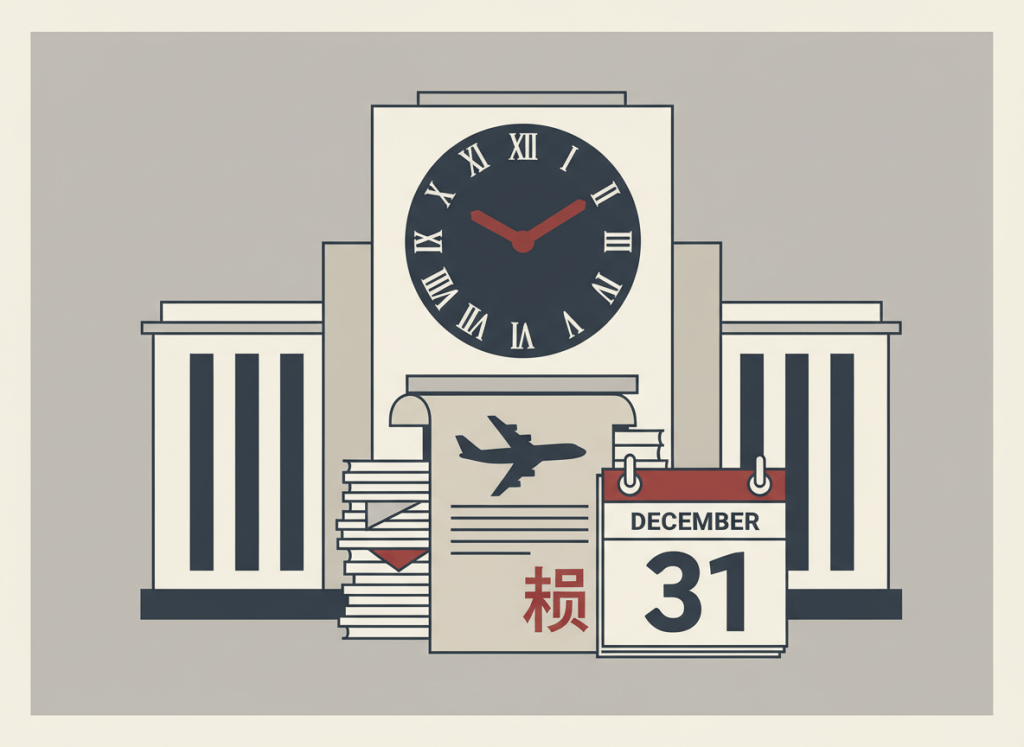
Here is where the story catches up to the moment this article is being written. EXIM’s current charter, extended by Congress in December 2019, sunsets on December 31, 2026, a little more than three months from now, and Congress has not yet acted to renew it, according to an analysis of the 2026 reauthorization fight. Competing proposals are on the table, from a ten year extension through 2036 to a more modest five year extension floated at a March 2026 House Financial Services Committee hearing, but as of this writing none has passed. If the sunset actually occurs, EXIM would be barred from approving any new transactions, though it could continue managing its existing obligations under an orderly liquidation, according to the Congressional Research Service’s most recent overview of the debate.
Even as its own legal survival hangs in the balance, EXIM has been expanding its mission in a direction that would have been unrecognizable to the agency’s 1934 architects. In February 2026, the administration announced Project Vault, an EXIM led initiative to build a U.S. strategic critical minerals reserve explicitly aimed at reducing dependence on China, and the Bank’s Board approved a direct loan of up to 10 billion dollars to back it, the largest single financing commitment in the program’s description, with a further 2 billion dollars expected from private investors. The initiative appears to be in nascent stages, and whether the Bank’s existing statutory export finance authority actually covers running a strategic mineral reserve at all remains an open question. An agency originally built to help finance trade with one geopolitical rival is now making its largest ever single bet specifically to counter a different one, while Congress has not yet gotten around to confirming the agency will still be allowed to exist come January.
The Temporary Institution
Every entity in this series has hit the implicit guarantee problem from a different angle, but EXIM’s version is unusually literal: rather than discovering the limits of an accounting fiction or a debt ceiling, EXIM periodically discovers that its entire legal existence is a temporary arrangement Congress can simply decline to renew, and has, more than once. The result is an institution that spends its energy lurching between total shutdown, years of governance paralysis, and sudden multibillion dollar mission expansions timed to whatever geopolitical priority is ascendant, all while its core financial exposure remains concentrated in one manufacturer’s aircraft to a degree its own inspector general keeps flagging as a risk. The Bank that could not close a Soviet deal in 1934 is now racing to close a ten billion dollar critical minerals deal aimed at China in 2026, without knowing whether Congress will let it keep operating past New Year’s Eve.

