Three Names, One Scam: How WealthTutor Played Adviser Dress Up While Regulators Napped
You have read the press release. Some plucky staff in gray suits finally noticed that a company calling itself WealthTutor Corp was about as real as a late night trading bot on Telegram. The irony is not that the firm lied. Of course it lied. The irony is that it lied in public, on government forms, on a government website, for months, while the same government now congratulates itself for spotting the forgery it had been hosting.
The Form ADV That Lived in Fantasy Land
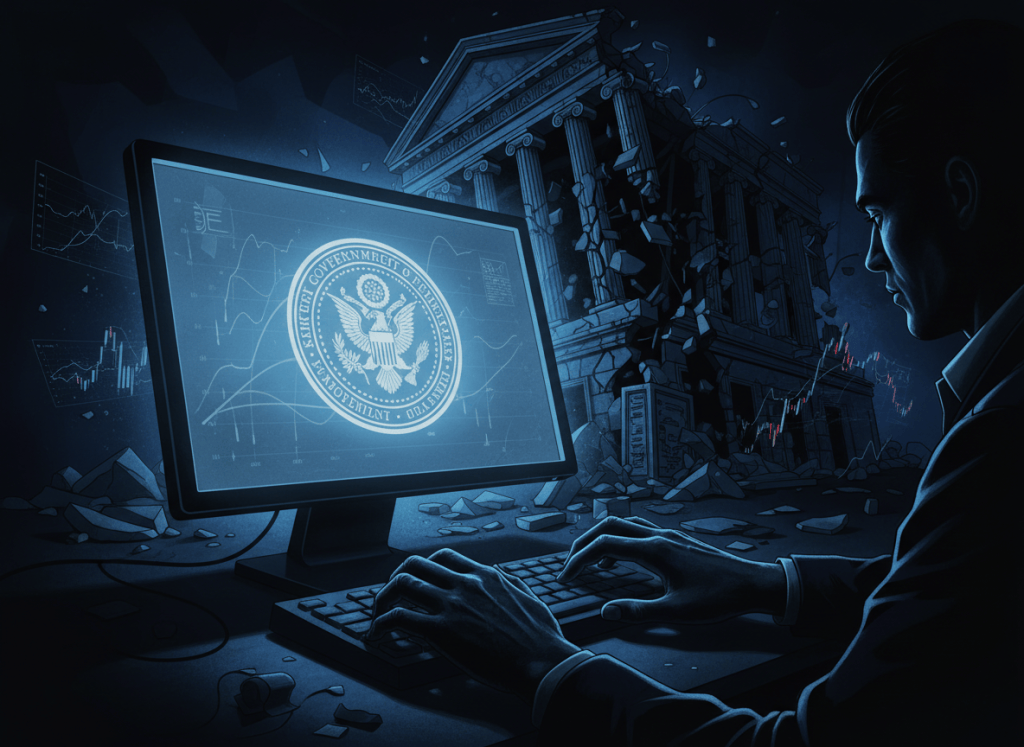
The Securities and Exchange Commission complaint against Ichcoin Tech Corp, later renamed WealthTutor Corp, reads like a parody of the agency’s own disclosure system. According to the civil complaint and the matching litigation release, the firm filed a Form ADV that claimed it was a registered investment adviser when it was not even close to eligible.
They did not stop at lying about status. The form listed a CRD number that belonged to an entirely unrelated individual, phone numbers that rang into the void, and a principal office address that the company did not actually occupy. In other words, the very fields the public is told to trust as objective, verifiable data turned out to be performance art.
The fake registration still shows its ghost in the SEC’s own investment adviser database. The adviserinfo page for firm number 323744 is right there on IAPD, with the status marked as withdrawn. It reads less like a regulator’s proud archive and more like a crime scene left intact for tourism.
From Indicator Global to Ichcoin to WealthTutor
Corporate shape shifting is not a new trick, but Ichcoin Tech Corp turned it into something close to performance art. The SEC describes the company as having been known at various points as Indicator Global Inc, Ichcoin Tech Corp, and finally WealthTutor Corp. Three corporate identities, one scheme, and a trail of paperwork that should have lit up every system that claims to monitor registration risk.
This was not some back alley operation hiding in the shadows. The company used its evolving set of names to present itself as a sophisticated technology driven adviser. They did what every fraudster with a Canva account now does. Glossy website. Sleek branding. And in this case, the pièce de résistance, a forged SEC registration certificate proudly displayed online. The complaint spells it out. WealthTutor’s operators posted a counterfeit certificate to convince investors the SEC had blessed their act.
The App That Was Really a Funnel
The company did not just lie on paper. It built a trading fantasy for your phone. According to the SEC, Ichcoin Tech Corp rolled out a phony mobile trading application. Investors believed they were watching real positions and real balances. Behind the interface, the app was not routing trades. It was routing cash. Money in, nothing out, except to the people running the scheme.
At least three investors fell for it. One lost nearly two million dollars. Think about the kind of trust it takes to move that much money into a brand new app from a little known firm with a churning name history. Then remember that the investor could look up the firm on a government website and see what looked like a real registration. The trust did not come out of nowhere. It was manufactured, with a generous assist from the illusion of regulatory vetting.
Red Flags in the Wild, Silence in the Temple
While officialdom slept, the people it loves to lecture were already sounding alarms. In December 2024, the Washington State Department of Financial Institutions quietly dropped an alert about alleged crypto related scams incorporating in the state. Among the usual menagerie of shell companies and blockchain flavored hallucinations sat Ichcoin Tech Corp. State regulators saw enough smoke to warn the public long before the SEC took federal action.
Go lower down the hierarchy and the picture gets more damning. Users on Reddit’s r/CryptoScams were posting victim reports tied to the scheme as early as June 2024. Screenshots of fake app balances. Stories of withdrawal delays that turned into black holes. The usual pattern of online fraud, narrated in real time by the people living it. No subpoena necessary. No forensic data pull. Just a browser and a search bar.
Yet according to the federal docket, the SEC did not file its case in the Northern District of New York until August 27, 2026, in SEC v. Ichcoin Tech Corp, now known as WealthTutor Corp, Case No. 1:2026cv01648. The litigation release followed a day later. By then, the money was long gone and the only thing left to protect was the narrative.
The System That Believes Its Own Forms
This case matters less for its cast of characters and more for what it reveals about the machinery around them. The SEC did not just get fooled by a clever fraud. It built the stage set. The Form ADV, with its air of bureaucratic precision, became a prop. The adviserinfo database, marketed as a safe public gateway to adviser credentials, became an unwitting recommendation engine. A forged certificate uploaded to a website completed the Holy Trinity of official looking fiction.
Everyone is told to check registrations, verify CRD numbers, and read public filings. In this case, doing all that due diligence would have walked a careful investor straight into the trap. The official data did not counter the scam. It amplified it. When the same agency later announces that it has sprung into action to protect investors, it leaves out the awkward part where its own systems served as character witnesses for the defendant.
What You Are Supposed to Forget
None of this absolves WealthTutor or whatever name its operators are using this quarter. They built a phony trading app, forged credentials, and siphoned cash from at least three investors, including one seven figure victim. That belongs in court and, ideally, in prison. But if you stop the story there, you have accepted the comforting version. Rogue actors, vigilant regulators, problem solved.
Look again at the timeline. Retail investors on a subreddit spotted smoke in mid 2024. A state regulator flagged the corporate shell in December 2024. The SEC’s own database showed suspicious registration details paired with unreachable phone numbers and a borrowed CRD number. A counterfeit SEC certificate sat in plain sight on the firm’s website. The federal enforcement machine caught up in late 2026, after the damage.
The lesson is not that you should distrust every press release. You already do. The sharper lesson is that the symbols you are told to trust (registrations, certificates, public filings) are only as honest as the people who feed data into them and the people who are meant to check that data. In the WealthTutor case, the con artists did their part with unusual enthusiasm. The system did not.
Next time you pull up an adviser record on a government site and feel the warm glow of institutional reassurance, remember Ichcoin Tech Corp. Remember Indicator Global, WealthTutor, and whichever alias comes next. The file may say registered. The certificate may look official. The only thing you can safely assume is that if the story ever collapses, the same people who built the stage will appear at the end to tell you they were heroes all along.
WealthTutor represents one end of the federal regulatory spectrum “,” an agency so passive it hosted its own fraudsters’ credentials. The other end is worth examining too. Our coverage of the FTC’s breakroom panopticon documents what happens when a regulator overcorrects: a ten-year consent decree, a government-installed monitor paid by the companies he watches, and a forced asset transfer over a 70% share of the office kiosk market. The SEC’s WealthTutor failure and the FTC’s micromarket overreach are two ends of the same broken dial.
Sources
- SEC Litigation Release No. 26623, SEC v. Ichcoin Tech Corp. (n/k/a WealthTutory Corp.)
- SEC v. Ichcoin Tech Corp., Complaint, Case No. 1:2026cv01648 (N.D.N.Y.)
- SEC IAPD Firm Summary for purported adviser, firm number 323744
- Washington State DFI Investor Alert, December 2, 2024
- Justia docket for SEC v. Ichcoin Tech Corp., Case No. 1:2026cv01648
- Reddit r/CryptoScams community posts regarding Ichcoin Tech Corp and WealthTutor, June 2024 onward
- The $1.6 Million Ghost Transit Company: How Federal Grant Money Paid for Services That Never Existed
- Six Agencies Let DOGE Into the Building and Kept GAO on the Porch
- CMS Found $2.2 Billion in Unauthorized Obamacare Enrollments. So Who Did It?
- CBO Tests a One-Point Interest-Rate Increase. The Federal Debt Hits 222% of GDP.
- Federal Register Watch: October 16, 2026

