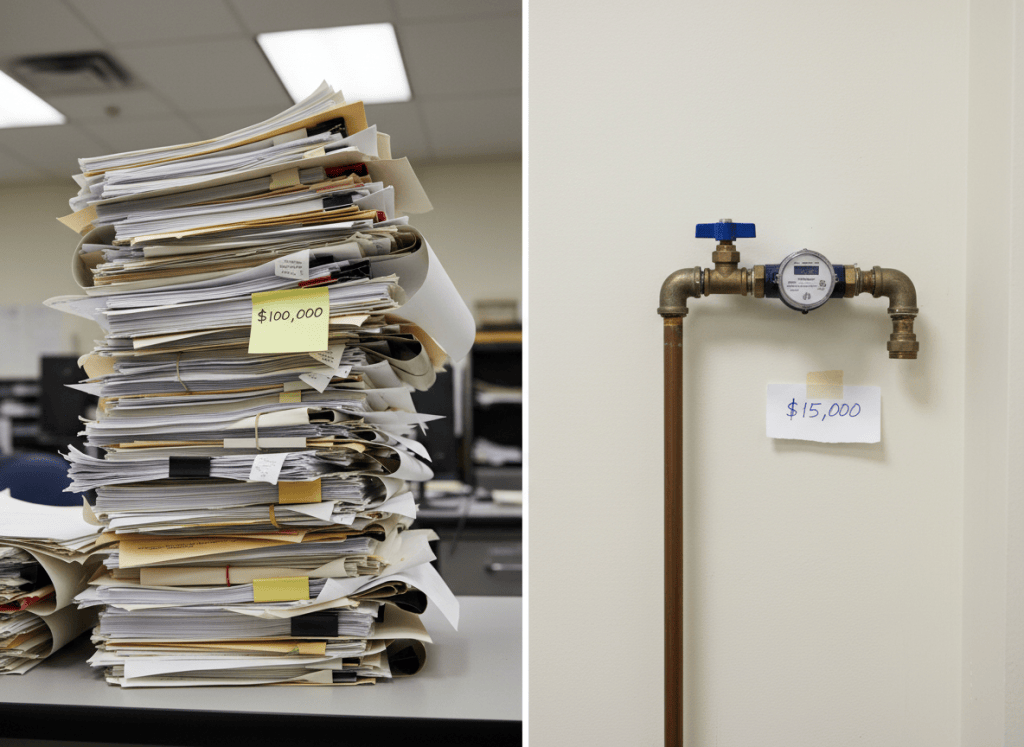
Imagine two identical tribal water projects, same pipe, same pump, same size crew, funded through two different federal agencies. One costs the tribal health consortium administering it about $15,000 in extra paperwork to complete. The other costs nearly $100,000. The physical infrastructure is the same. The only variable that changed is which federal agency’s money paid for it, and specifically, whether that agency had already bothered to sign a standardized agreement with the Indian Health Service. According to a new Government Accountability Office report, that gap is not hypothetical; it is a real cost estimate from a tribal health consortium that runs water programs in Alaska, and it is one of the clearest illustrations in the entire document of how interagency plumbing can cost more than the plumbing itself (Government Accountability Office, GAO-26-107178).
One Agreement, Two Outcomes
IHS routinely works with EPA to jointly fund tribal water projects, and over time the two agencies have built something useful, a standard interagency agreement, or IA, with agreed upon terms and conditions that both sides already understand (GAO-26-107178). When a project moves through that channel, the paperwork is largely settled in advance. USDA, by contrast, does not often contribute to projects already listed in IHS’s own project tracking database, and IHS area officials and USDA state office staff told GAO there is often little to no collaboration between the two agencies on the same tribal water projects (GAO-26-107178). When USDA money does end up funding pieces of an IHS project, it typically arrives through a different, less standardized channel, with the tribe itself acting as project owner, negotiating USDA’s application requirements directly and retaining responsibility for administering the funds on its own (GAO-26-107178).
That difference in plumbing between agencies produces a difference in cost that has nothing to do with the water system being built. The tribal health consortium that administers Alaska’s water program estimated that using funding sources without a standard IA in place, USDA being the example GAO cites by name, can add close to $100,000 in additional administrative costs to a single project (GAO-26-107178). The comparable figure for an EPA-funded project moving through the existing standard IA with IHS was about $15,000 (GAO-26-107178). Same category of project. A roughly sevenfold difference in overhead, driven entirely by whether the funding agency and IHS had already done the paperwork once, in advance, at the program level, instead of leaving each individual project to reinvent it.
Where the Extra Ninety Thousand Actually Goes
It would be easy to wave this off as an abstract accounting exercise, so it is worth being specific about where that nearly six figure gap comes from. According to the tribal health consortium’s own cost breakdown, the most significant drivers are the application process itself, the development and legal review of individual, one off project agreements negotiated from scratch, spending and billing procedures that differ from IHS’s own systems, and the ongoing coordination and reporting required to keep two agencies’ bookkeeping in sync across the life of a project (GAO-26-107178). None of that is water infrastructure. None of it is engineering, materials, or labor on the actual system tribal members will eventually drink from. It is entirely the cost of two federal bureaucracies figuring out, one project at a time, how to talk to each other and hand off money.
GAO is explicit that most of these costs are the kind that a standardized program level agreement could eliminate; the consortium’s own estimate flags application processes, individual agreement development, billing procedures, and reporting coordination as exactly the categories that standardized terms and conditions are designed to address (GAO-26-107178). In other words, nearly all of the $85,000 difference between the USDA path and the EPA path is not an inherent cost of moving federal water infrastructure money to a tribe. It is the cost of doing that negotiation over and over, at the individual project level, because no template exists.
The Fix Already Exists, Just Not for USDA
The frustrating part of this story is that GAO is not asking anyone to invent something new. IHS and EPA have already proven a standardized IA works; it is the reason EPA funded projects only run up about $15,000 in overhead rather than $100,000. GAO’s recommendation is essentially to extend that same template to USDA. GAO recommends that IHS, working with USDA’s Under Secretary for Rural Development, develop program level standardized interagency agreements, with agreed upon terms and conditions, for USDA’s Native American and Water and Waste Disposal programs, and use those agreements whenever tribes request that USDA funds be transferred to IHS (GAO-26-107178). Where legally permissible, GAO suggests those standard terms include advance lump sum payments and the removal of duplicative USDA administrative requirements, mirroring what already works in the EPA relationship (GAO-26-107178).
USDA’s own response to this recommendation is worth sitting with. The agency neither agreed nor disagreed, noting instead that it was already working on state level interagency agreements and that expanded use of those might be possible (GAO-26-107178). GAO pushed back on that framing directly, arguing that state by state agreements do not solve the underlying problem, since USDA needs an effective tool it can leverage nationwide, not a patchwork negotiated separately in every state where a tribal water project happens to sit (GAO-26-107178). A program level agreement, done once, would apply everywhere USDA and IHS work together. Fifty separate state level versions of the same negotiation simply relocates the inefficiency instead of removing it.
What a Sevenfold Markup Actually Buys
Step back from the specific numbers and the pattern here is almost embarrassingly simple. Two federal agencies can jointly fund the same category of tribal water project for wildly different amounts of overhead, and the only variable is whether they had already agreed, once, on how to work together before the money started moving. IHS and EPA did that homework years ago and the administrative cost dropped accordingly. USDA has not, and every tribal water project that touches USDA money pays a tax for that gap, a tax that shows up nowhere in a press release about funding awarded, but shows up very precisely in a tribal health consortium’s own internal accounting.
Ninety thousand extra dollars per project does not buy better water. It buys more lawyers reviewing individual agreements, more staff hours reconciling two accounting systems that were never designed to talk to each other, and more time before anyone actually turns on a tap. GAO has already shown, using IHS’s own relationship with EPA, exactly what the alternative costs. USDA’s job now is to stop treating that as optional.

